
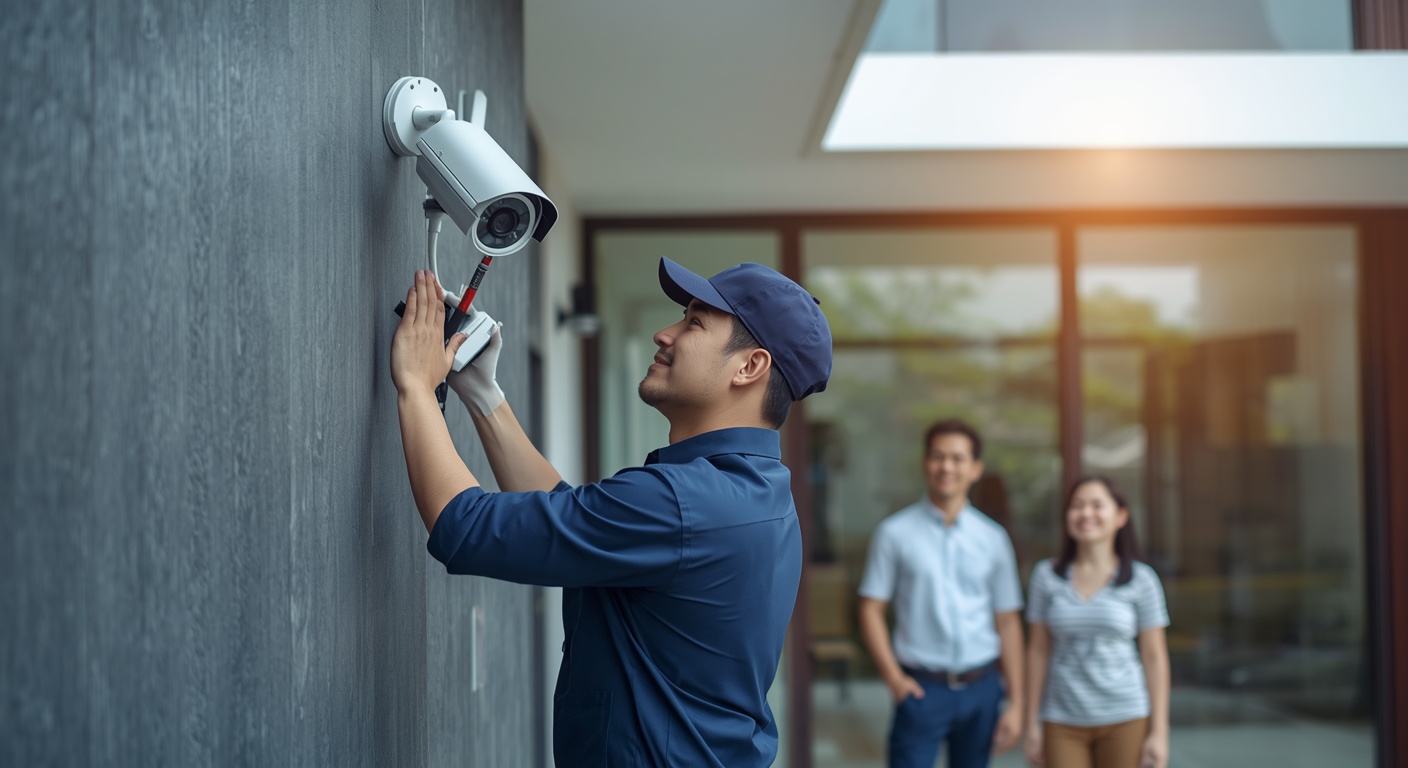
Choosing the best cctv malaysia setup for your home can feel confusing when there are so many camera types, apps, and installation options on the market. The right system is not simply the one with the highest resolution. For Malaysian homeowners, a good CCTV setup should match your property layout, security concerns, internet reliability, and budget. Whether you live in a landed house, condo, terrace home, or semi-D, this guide will help you compare the main options and choose a practical system that protects your home without paying for features you may never use.
If you are planning a wider home upgrade, it also helps to look at security as part of your overall house setup, just like in this Smart Home Guide Malaysia. For first-time buyers, security planning should also sit alongside essentials in this First Homeowner Checklist Malaysia.
1. Start with your home type and risk areas
The best CCTV system depends on what you are trying to monitor. A condo owner usually needs a simpler setup than a homeowner with a corner lot or a house with side access. Before comparing brands or features, list down the areas you want to cover.
Common areas homeowners monitor
- Main gate or front door
- Porch and car porch
- Back door or kitchen entrance
- Side lane access
- Living room entry points
- Staircase or indoor hallway
For most homes in Malaysia, the main security concern is at entry points. That means your front gate, porch, and rear entrance usually matter more than trying to cover every corner of the house. In many cases, 2 to 4 well-placed cameras work better than 6 poorly placed ones.
Quick matching guide
| Home type | Typical CCTV need | Suggested setup |
|---|---|---|
| Condo or apartment | Front door and living area | 1 to 2 indoor or door-facing cameras |
| Terrace house | Front porch, gate, back entrance | 3 to 4 cameras |
| Semi-D or corner lot | Multiple sides and outdoor access | 4 to 6 cameras |
| Bungalow | Wider perimeter coverage | 6 or more cameras, possibly with zones |
If your home has blind spots, dark side passages, or low gates that are easy to climb, prioritise those first. There is no point installing expensive cameras in low-risk areas while leaving obvious access points uncovered.
2. Understand the main CCTV system types
When comparing CCTV Malaysia options, most homeowners will come across three main categories: wired CCTV systems, wireless cameras, and smart app-based cameras. Each has pros and cons.
Wired CCTV systems
These are often installed by professionals and use cables for power and video transmission, usually with a recorder.
- Best for: Landed homes, long-term use, stable recording
- Pros: Reliable, continuous recording, less dependent on Wi-Fi
- Cons: More installation work, harder to relocate
This option suits homeowners who want dependable 24/7 monitoring and do not mind installation work.
Wireless CCTV cameras
These use Wi-Fi for data transmission and are easier to install in some homes.
- Best for: Condos, small homes, renters, quick setup
- Pros: Easier to install, flexible placement, often app-friendly
- Cons: Performance depends on Wi-Fi strength, may need more charging or power planning
If your internet is unstable or certain parts of the house have weak signal, these cameras may not perform well in real-world use.
Smart cameras with app integration
These are popular for homeowners who want mobile alerts, remote viewing, cloud storage, and integration with other smart devices.
- Best for: Users who check cameras remotely and want app control
- Pros: Convenient, mobile notifications, easy playback
- Cons: Some features may require subscriptions, cloud reliance can add ongoing cost
If you are already considering digital home upgrades, smart CCTV may fit well into a wider home system. It can be useful to plan these together with lighting, sensors, or alarms rather than adding devices one by one.
3. Choose the features that actually matter
Many buyers get distracted by long feature lists. In practice, a few core features matter most for home security.
Video quality
Clear footage is important, especially at gates and entrances. A higher resolution helps when identifying faces, number plates, or movement. But image clarity also depends on lighting, camera placement, and lens quality. A badly placed high-resolution camera can still give poor results.
Night vision
This is essential for Malaysian homes because many incidents happen in low light. Make sure the camera can clearly capture faces and movement near gates, porches, and side entrances at night.
Motion detection and alerts
Good motion detection can reduce the need to review long hours of footage. App alerts are useful, but only if they are accurate. If alerts trigger every time a cat walks by or tree branches move, you may start ignoring them.
Weather resistance
Outdoor cameras in Malaysia must handle heat, rain, and humidity. A camera installed at the porch or gate should be designed for outdoor use, not just placed outside under a roof and hoped for the best.
Storage options
- Local storage: Uses a memory card, recorder, or hard drive
- Cloud storage: Stores video online for remote access
Local storage can be more cost-effective over time, while cloud storage can be more convenient. Some homeowners prefer a mix of both.
Remote access
Remote viewing is useful if you travel often, work long hours, or want to check deliveries, visitors, or house activity while away. For many buyers, this is now a must-have feature.
4. Plan the right camera placement before installation
One of the biggest mistakes homeowners make is choosing cameras before planning camera positions. Placement affects performance more than many people realise.
Practical placement tips
- Place cameras high enough to reduce tampering, but not so high that faces become unclear
- Avoid pointing directly into bright sunlight or strong porch lights
- Cover entry paths, not just broad empty spaces
- Make sure the front camera can capture visitors before they reach the door
- For back lanes or side access, use angles that show movement direction clearly
- Check whether roof overhangs, grills, or plants block the view
For a terrace house, a practical setup may be one camera at the gate, one under the porch facing the main door, one at the back door, and one covering the side or rear lane if accessible. For a condo, a single indoor camera facing the entrance and living area may be enough, depending on your needs.
If you are doing renovation works, CCTV wiring should be planned early to avoid messy surface trunking later. This is especially useful when reviewing a wider Home Renovation Guide Malaysia or coordinating with electrical and interior work.
5. Compare installation, maintenance, and ongoing costs
The best CCTV choice is not just about purchase price. You should also think about installation work, app subscriptions, storage upgrades, and maintenance over time.
Questions to ask before buying
- Do I need professional installation or can this be self-installed?
- Will I need extra cabling, drilling, or network setup?
- Is there a monthly cloud storage fee?
- How long can footage be stored before it is overwritten?
- Who will help if the app stops working or the camera goes offline?
- Can I add more cameras later?
For some homeowners, a lower-cost camera becomes expensive over time because of subscription fees or limited support. For others, a professionally installed wired system may cost more upfront but be easier to live with in the long run.
It is also worth treating CCTV as part of regular property upkeep. A security system only works well if lenses are cleaned, storage is checked, and recording is tested occasionally. You can include this in your routine using a Home Maintenance Checklist Malaysia.
Simple buyer checklist
- Identify your main entry points first
- Choose indoor or outdoor cameras correctly
- Check Wi-Fi strength if using wireless cameras
- Confirm night vision performance
- Review storage method and retention time
- Plan camera positions before purchase
- Ask about warranty and after-sales support
- Leave room for future expansion
6. Common mistakes when choosing CCTV for Malaysian homes
Even a good camera system can disappoint if the setup is wrong. These are some of the most common mistakes homeowners make.
Buying too many cameras
More cameras do not always mean better security. Focus on useful coverage, not quantity.
Ignoring internet limitations
Wireless cameras need stable coverage. If your porch or back area has weak Wi-Fi, remote viewing and alerts may be unreliable.
Choosing cameras based only on resolution
Resolution matters, but so do angle, lighting, night performance, and installation height.
Not checking storage limits
Some homeowners assume footage will be available for weeks, only to find it has already been overwritten.
Poor outdoor suitability
Malaysia’s weather can be harsh on electronics. Outdoor cameras need proper weather resistance and sheltered placement where possible.
Forgetting privacy and legal considerations
Your cameras should monitor your property, not intrude unnecessarily into neighbours’ private spaces. This helps avoid disputes and keeps the setup focused on home protection.
FAQ: Best CCTV Malaysia for homeowners
How many CCTV cameras do I need for a typical home in Malaysia?
For many terrace houses, 3 to 4 cameras are enough to cover the front gate, porch, back entrance, and one additional access point. Condos may only need 1 to 2 cameras, while larger homes may need 4 to 6 or more depending on layout.
Is wired or wireless CCTV better for home use?
Wired CCTV is usually better for long-term reliability and continuous recording, especially in landed homes. Wireless CCTV can be more convenient for condos or smaller homes, but it depends more on strong Wi-Fi coverage.
Do I need internet for CCTV to work?
Not always. Some systems can record locally without internet. However, internet is usually needed for remote viewing, app notifications, and cloud storage features.
Where should I place CCTV cameras around the house?
Prioritise entry points such as the front gate, main door, back door, porch, and side access. Avoid placing cameras too high or at poor angles where faces cannot be clearly seen.
Can CCTV be installed during renovation?
Yes, and this is often the best time to do it. Installing CCTV during renovation allows you to hide wiring more neatly and coordinate camera positions with lighting, gate design, and electrical points.
The best CCTV Malaysia setup is the one that fits your home layout, covers real risk areas, and remains easy to use over time. Instead of chasing the most advanced system, focus on reliable coverage, clear night footage, practical storage, and a setup you can maintain. When those basics are right, your home security system becomes far more useful and far less stressful.


