
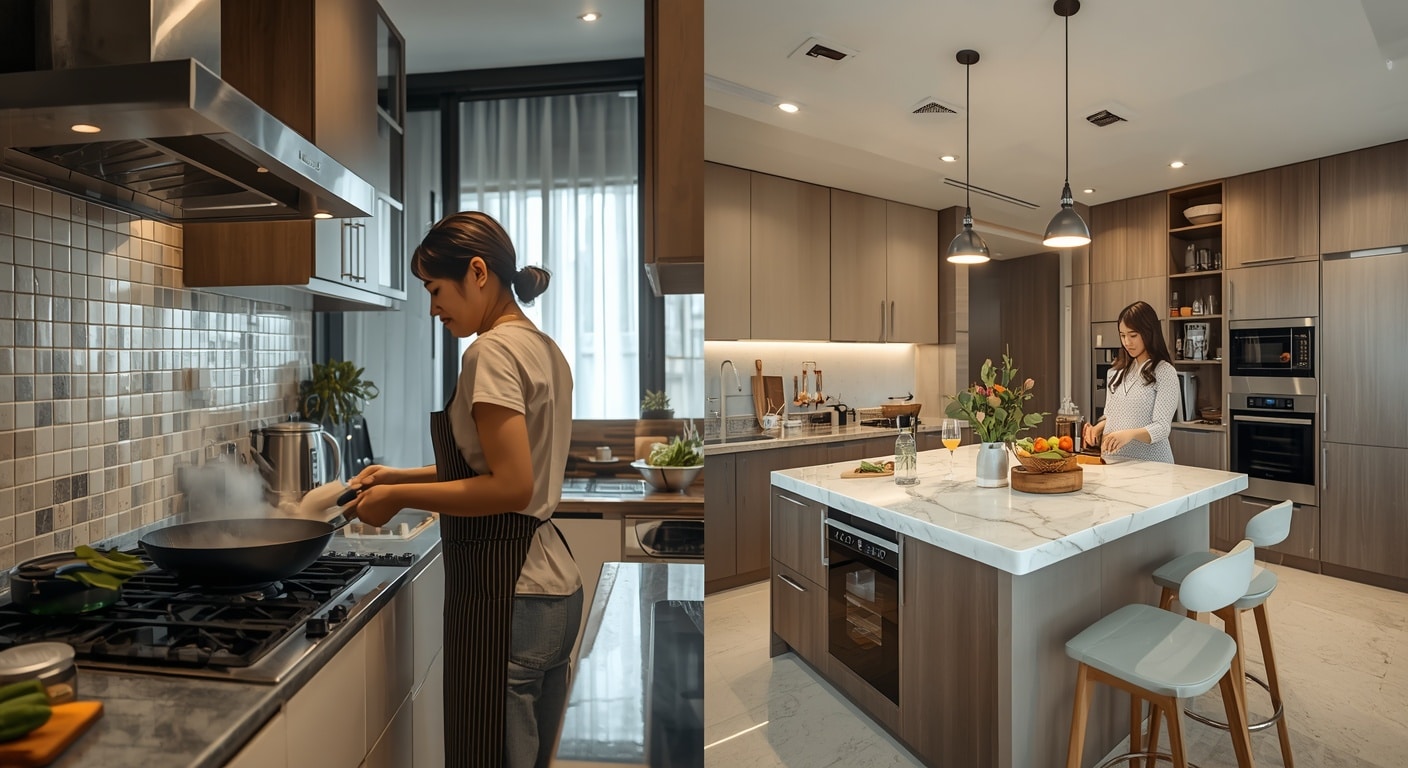
Choosing between a wet kitchen and dry kitchen is a common question for Malaysian homeowners, especially when planning a renovation or buying a new house. In many local homes, the decision affects cooking comfort, cleaning, layout, ventilation, and budget. This guide explains Wet Kitchen vs Dry Kitchen Malaysia in a practical way, so you can decide which setup suits your cooking style, family needs, and home size.
Some households need a fully separated wet and dry kitchen because they cook often, use strong spices, or prepare large family meals. Others may be fine with a single open kitchen if they do light cooking only. The right choice depends less on trend and more on how you actually live every day.
What is a wet kitchen and what is a dry kitchen?
A wet kitchen is the main cooking area used for heavy food preparation and daily cooking. It usually handles frying, boiling, steaming, washing ingredients, and dealing with smoke, oil, and moisture. In Malaysia, the wet kitchen is often located at the back of the house or near the yard for better ventilation and easier cleaning.
A dry kitchen is a cleaner, more presentable space used for light food prep, serving, making drinks, storing appliances, or entertaining guests. It is commonly designed as part of an open-plan dining or living area. In condos and modern terrace homes, the dry kitchen may include a kitchen island, built-in cabinets, and smaller appliances.
In simple terms:
- Wet kitchen: for serious cooking and washing
- Dry kitchen: for light use, serving, and display
Many Malaysian homes combine both spaces, but not every home needs both. If you are still in the planning stage, it helps to review a broader Home Renovation Guide Malaysia before finalising your kitchen layout.
Key differences between wet kitchen and dry kitchen in Malaysian homes
The biggest difference is function. A wet kitchen is built for practical use, while a dry kitchen is often designed for convenience and appearance. Here are the main areas where they differ:
1. Cooking intensity
Wet kitchens are meant for heavy cooking, including deep-frying, stir-frying sambal, boiling soup, and preparing ingredients with lots of water. Dry kitchens are better for making coffee, preparing breakfast, plating food, or using a microwave and toaster.
2. Ventilation needs
Because Malaysian cooking often produces heat, grease, and strong smells, wet kitchens need stronger ventilation. This may include extractor hoods, windows, exhaust fans, and good airflow. Dry kitchens usually need less ventilation because the cooking is lighter.
3. Finishes and materials
Wet kitchens should use durable, easy-to-clean materials such as tiled walls, quartz or solid-surface countertops, and moisture-resistant cabinets. Dry kitchens can focus more on style, with feature lighting, glass cabinets, and cleaner finishes since they face less wear.
4. Cleaning and maintenance
Wet kitchens get dirty faster because they handle raw food, oil splashes, and water spills. Dry kitchens are easier to keep neat and are often used as the kitchen seen by guests. For long-term upkeep, a simple Home Maintenance Checklist Malaysia can help you manage cleaning and repairs.
5. Layout and location
In landed homes, the wet kitchen is often an extended back section, while the dry kitchen sits closer to the dining area. In apartments, space is tighter, so homeowners may need to combine functions in one compact kitchen with zoning instead of full separation.
Which option is better for your lifestyle?
The better choice depends on how often you cook and how your household uses the kitchen.
Choose a wet and dry kitchen setup if:
- You cook daily, especially oily or spicy meals
- Your family prepares large meals during weekends or festive seasons
- You want a cleaner front kitchen for guests
- You have enough floor area, usually in a landed home
- You need separate zones for food prep, washing, and serving
Choose a single kitchen or mainly dry kitchen concept if:
- You do light cooking only
- You rely more on simple meals, takeaway, or small appliances
- You live in a condo or apartment with limited space
- You prefer an open, modern layout
- You want to reduce renovation cost
For many Malaysian families, the ideal solution is not choosing one over the other, but creating a practical combination. For example, the dry kitchen can face the dining space with built-in storage and a breakfast counter, while the wet kitchen at the back handles frying and washing.
Space, budget, and renovation considerations
Before deciding, look at your actual floor plan. A wet and dry kitchen setup can improve convenience, but it also adds cost and requires thoughtful planning.
Space planning
If your home is small, forcing two kitchen zones may make both areas cramped. In this case, use one kitchen with clear zones instead:
- Place the sink and hob on one side for heavy use
- Use a counter or island for serving and small appliances
- Add sliding glass doors if you want to contain smoke without fully closing the space
- Use tall storage to maximise vertical space
Budget planning
Having two kitchen areas usually means more cabinetry, countertops, lighting, plumbing points, and electrical work. Your final cost depends on material choice, cabinet design, built-in appliances, and whether you are extending the kitchen area. Before setting your budget, it is useful to compare renovation expenses in this House Renovation Cost Malaysia guide.
Design and workflow
A good kitchen is not just attractive. It should support your daily routine. Think about these questions:
- Where will groceries be unloaded?
- Is the sink too far from the cooking hob?
- Do you need a separate prep area for family cooking?
- Will the washing machine share the wet kitchen space?
- Do you need space for a second fridge or chest freezer?
If you care about both practicality and appearance, a well-planned layout matters more than copying a showroom design. Style decisions should support your daily use, not make the kitchen harder to maintain.
Best kitchen setup by home type in Malaysia
Different property types suit different kitchen concepts.
Terrace houses
Terrace homes often work well with a dry kitchen in the main interior area and a wet kitchen extension at the back. This is a common setup because it separates entertaining space from heavy cooking. Make sure any extension follows local rules and has proper drainage and ventilation.
Semi-D and bungalow homes
Larger homes have more flexibility. You can create a spacious wet kitchen, pantry, and a show kitchen for guests. This setup suits big families, home cooks, and people who host often.
Condos and apartments
Space is usually the main limitation. Instead of trying to squeeze in two full kitchens, create zones within one space. Use a strong hood, easy-clean backsplash, and multifunctional storage. A compact dry kitchen counter can still work for drinks and serving.
New homeowners
If you are moving into your first home, avoid overbuilding based on trends. Start with your real habits and future needs. A practical plan is often better than a complicated kitchen you rarely use.
Pro tips for planning a practical wet and dry kitchen
- Prioritise ventilation: Malaysian cooking produces heat and odour quickly. Invest in a good hood, windows, and airflow.
- Use the right materials: Wet kitchens need surfaces that can handle water, grease, and frequent cleaning.
- Plan enough power points: Dry kitchens often use coffee machines, kettles, air fryers, and blenders.
- Think about cleaning: Glossy finishes may look nice but can show fingerprints and oil marks easily.
- Separate clutter from display: Keep busy prep work in the wet kitchen so the dry kitchen stays neat.
- Choose appliances based on use: Not every home needs a large built-in oven or oversized hood. Buy for your cooking style, not just looks.
Appliance planning also matters. If you are comparing practical options for local homes, browse this guide to the Best Home Appliances Malaysia.
Common mistakes homeowners make
- Copying overseas kitchen designs: Open kitchens may look attractive, but they may not suit frequent frying and strong-smelling local dishes.
- Ignoring ventilation: A beautiful kitchen becomes uncomfortable fast if smoke and grease build up.
- Making the wet kitchen too small: If you cook often, you need proper prep space, not just a narrow back area.
- Overspending on the dry kitchen: It is easy to spend too much on finishes and neglect practical storage and workflow.
- Poor lighting: Both kitchens need task lighting, especially over counters, sink, and hob areas.
- Not planning storage properly: Pots, spices, cleaning items, and small appliances need dedicated space.
Quick checklist before you decide
- Do you cook heavy meals at least several times a week?
- Do you need to keep smoke and smells away from the dining area?
- Does your home have enough space for two separate kitchen zones?
- Can your renovation budget cover extra cabinets, wiring, and plumbing?
- Do you often host guests and want a cleaner front kitchen?
- Will your kitchen be easy to clean and maintain long term?
If you answered yes to most of these, a wet and dry kitchen setup may be worth it. If not, a well-designed single kitchen can still work very well for Malaysian homes.
FAQs
Is a wet kitchen necessary in Malaysia?
Not always, but it is useful for households that cook often, especially dishes that create smoke, oil, and strong smells. If you mainly do light cooking, one well-planned kitchen may be enough.
Can a condo have both a wet and dry kitchen?
Yes, but usually in a compact form. Instead of two separate rooms, condo owners often create two zones within one kitchen using counters, storage planning, and better ventilation.
Which is more expensive, a wet kitchen or a dry kitchen?
A wet kitchen may cost more in practical fittings because it needs durable materials, plumbing, and ventilation. However, a dry kitchen can also become expensive if you use premium finishes, built-ins, and decorative design features.
What is the biggest benefit of having both wet and dry kitchens?
The main benefit is separation of function. You can keep heavy cooking, washing, and mess in one area while maintaining a cleaner, more presentable space for serving and socialising.
How do I choose between them when renovating?
Start with your actual cooking habits, home size, and budget. If you cook daily and have enough space, two zones are practical. If space is limited, design one kitchen carefully with separate prep and serving areas.
In the end, the best answer to Wet Kitchen vs Dry Kitchen Malaysia is the one that matches how your household cooks, cleans, and lives. A practical kitchen should support daily life, not just look good in photos. Focus on ventilation, workflow, and realistic space planning, and you will make a better long-term decision for your home.


