
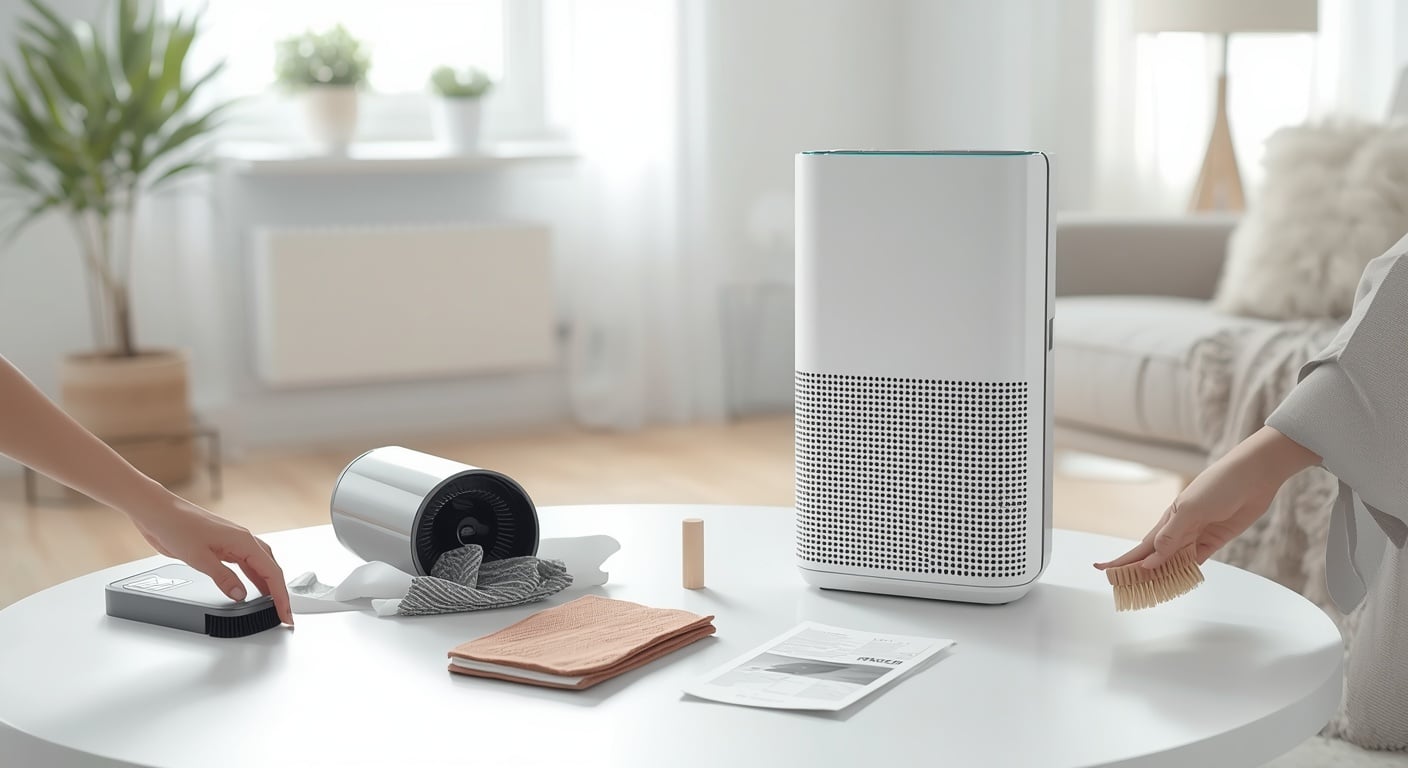
An air purifier maintenance guide helps Malaysian homeowners keep indoor air cleaner, extend appliance lifespan, and avoid weak performance caused by clogged filters or poor placement. In Malaysia, haze season, traffic dust, renovation particles, pet dander, and year-round humidity can make air purifiers work harder than expected. Proper upkeep is not complicated, but it does need a simple routine. This guide explains what to clean, when to replace filters, how to spot problems early, and how to maintain your unit safely in condos, terrace houses, and landed homes.
Why regular air purifier maintenance matters in Malaysia
Many homeowners only think about their air purifier when the filter light turns on. In practice, regular maintenance affects both air quality and operating cost. A dirty pre-filter blocks airflow, which forces the motor to work harder. A full HEPA or carbon filter may stop trapping particles and odours effectively. In humid conditions, neglected units may also develop musty smells.
Malaysian homes often deal with several indoor air issues at the same time:
- Fine dust from busy roads and construction nearby
- Haze particles during dry periods
- Cooking smells in apartments with limited ventilation
- Pet fur and dander
- Renovation dust after hacking, sanding, or painting
- Mould risk in damp rooms
If you recently upgraded your home or changed your layout, it also helps to review your wider upkeep routine using this Home Maintenance Checklist Malaysia. Good maintenance habits across the home support better indoor air quality overall.
Air purifier parts that need attention
Most air purifiers have similar components, even if the controls and features differ. Understanding each part makes maintenance much easier.
Pre-filter
This is the first layer that catches larger dust, hair, and lint. It usually gets dirty fastest and often needs the most frequent cleaning. If your unit has a washable pre-filter, clean it regularly and make sure it is fully dry before reinstalling.
HEPA filter
The HEPA filter traps fine particles such as dust, pollen, and smoke. This filter is usually not washable unless the manufacturer clearly says so. Vacuuming or washing a non-washable HEPA filter can damage its structure and reduce performance.
Activated carbon filter
This helps absorb odours, smoke, and some gases. In Malaysian kitchens or homes with pets, the carbon filter may wear out faster. If unpleasant smells return quickly, the carbon filter may be due for replacement.
Sensor area
Many modern units have air quality sensors. Dust buildup on the sensor can cause false readings, making the purifier run too high, too low, or show inaccurate air quality levels.
Air intake and outlet grills
These areas collect visible dust over time. Blocking them reduces airflow and weakens purification.
Exterior body and control panel
Wiping the exterior keeps dust from being pulled back into the unit and helps buttons or touch controls stay responsive.
Recommended maintenance schedule for Malaysian homes
The right schedule depends on your household. A home near a main road, with pets, smokers, frequent cooking, or ongoing renovation work will need more frequent checks than a low-traffic home with light use.
| Task | Recommended Frequency | Notes |
|---|---|---|
| Check pre-filter | Every 2 to 4 weeks | Clean earlier if visibly dusty |
| Wipe air intake and outlet | Every 2 to 4 weeks | Use a dry or slightly damp cloth |
| Clean sensor area | Every 1 to 2 months | Use a soft brush or cotton bud if allowed |
| Inspect HEPA filter | Every 2 to 3 months | Do not wash unless specified |
| Replace carbon filter | Every 3 to 6 months | Depends on odours and usage |
| Replace HEPA filter | Every 6 to 12 months | Depends on model and environment |
| Full unit review | Every 6 months | Check placement, noise, and airflow |
If your purifier is used daily in bedrooms or living areas, set recurring reminders on your phone. Homes that recently completed works may need closer attention, especially after dusty projects. If you are still planning upgrades, this Home Renovation Guide Malaysia can help you plan around dust control and post-renovation cleaning.
How to clean your air purifier safely and correctly
Before doing any maintenance, switch off the unit and unplug it. Never clean internal components while it is connected to power.
Step 1: Move the unit to a clean working area
Place it on a dry floor or table with enough space. Avoid opening the unit in a windy balcony area where trapped dust may blow back into the home.
Step 2: Remove and clean the pre-filter
Take out the pre-filter according to the manufacturer instructions. If it is washable, rinse it gently with water only unless the manual allows mild soap. Let it dry completely before reinstalling. If it is not washable, use a vacuum with a soft brush attachment.
Step 3: Inspect the HEPA and carbon filters
Do not wash these unless the product manual clearly says they are washable. Check for heavy grey buildup, lingering odours, or reduced airflow. If the filter looks saturated or the replacement period has passed, change it.
Step 4: Clean the sensor and grills
Use a soft dry cloth, small brush, or cotton bud to remove dust from the sensor cover, intake, and outlet grills. Avoid spraying water or cleaning liquid directly into the machine.
Step 5: Wipe the outer body
Use a microfibre cloth to wipe the exterior. In humid homes, this also helps prevent sticky dust from building up on the surface.
Step 6: Reassemble and reset filter indicator
Once all parts are properly fitted, plug the unit back in and reset the filter indicator if your model has one. A reset should only be done after actual cleaning or replacement, not to ignore maintenance.
Quick maintenance checklist
- Unplug the purifier before opening it
- Clean the pre-filter first
- Check if HEPA and carbon filters need replacement
- Wipe grills and sensor area gently
- Dry washable parts fully before reinstalling
- Reset the indicator only after maintenance is completed
Signs your air purifier needs maintenance or filter replacement
Some units give a filter warning light, but many signs show up before that. Watch for these clues:
- Airflow feels much weaker than before
- The unit sounds louder than usual
- Dust collects faster on nearby furniture
- Odours linger longer in the room
- The air quality indicator stays on one reading all the time
- The purifier turns on but does not seem to improve the room
- A musty or stale smell comes from the machine
Do not assume every issue means the purifier is faulty. In many cases, the filters are simply overdue for cleaning or replacement. Placement also matters. If the unit is pushed tightly against a wall, hidden behind curtains, or blocked by furniture, airflow drops even if the filters are clean.
If you are comparing replacement decisions with other home devices, this Best Home Appliances Malaysia guide may help you think about long-term upkeep and efficiency when choosing household equipment.
Pro tips to improve performance and reduce maintenance problems
Good maintenance is not only about cleaning. Daily use habits can make a big difference.
Place the purifier correctly
Leave space around the air intake and outlet. Avoid corners with poor airflow. In bedrooms, place the unit where air can circulate freely rather than behind a side table or curtain.
Use the right speed at the right time
During haze, after vacuuming, while cooking, or after guests visit, use a higher setting for a few hours. Running only on low speed all the time may not be enough for heavier particle loads.
Close windows during high outdoor pollution periods
An air purifier works best when it is not constantly fighting new outdoor dust or smoke entering the room.
Control moisture separately
Air purifiers are not dehumidifiers. In damp rooms, use proper ventilation or a dehumidifier if needed. This helps reduce mould risk and prevents stale smells.
Vacuum and dust the room regularly
The purifier is part of your indoor air strategy, not the only solution. If the room itself is dusty, filters will clog faster.
Match the purifier to room size
If the unit is too small for your living room, performance will feel weak even with perfect maintenance. Large open-plan spaces may need a higher-capacity unit or more than one device.
Common mistakes homeowners make
- Washing a non-washable HEPA filter: This can ruin the filter and reduce its ability to trap fine particles.
- Ignoring the pre-filter: A dirty pre-filter makes the whole system less efficient.
- Resetting the filter light without doing maintenance: This hides the problem instead of solving it.
- Using the purifier in a blocked position: Poor placement reduces airflow and cleaning effectiveness.
- Waiting until the unit smells bad: Maintenance should be preventive, not delayed until performance drops badly.
- Buying the wrong replacement filter: Always check model compatibility before ordering.
- Reinstalling damp parts: Moisture inside the unit can cause odours and damage.
FAQ
How often should I replace my air purifier filter in Malaysia?
It depends on the model, usage, and home environment. In many Malaysian homes, pre-filters need cleaning every 2 to 4 weeks, carbon filters may need replacement every 3 to 6 months, and HEPA filters often last 6 to 12 months. Homes with pets, smokers, heavy cooking, haze exposure, or nearby construction may need faster replacement.
Can I wash my HEPA filter?
Only if the manufacturer clearly states that the HEPA filter is washable. Most HEPA filters are not designed to be washed. Washing the wrong type can damage the filter fibres and reduce performance.
Why does my air purifier still smell even after cleaning?
If the smell remains, the carbon filter may be saturated and due for replacement. A musty smell can also happen if washable parts were not dried fully before reinstalling, or if the room has underlying dampness or mould issues.
Is it okay to run an air purifier all day?
Yes, many homeowners run their air purifier daily, especially in bedrooms and living areas. Continuous use can be helpful in homes with allergies, pets, traffic dust, or haze exposure. Just make sure maintenance is done on schedule so airflow stays strong.
Does an air purifier help after home renovation?
It can help reduce airborne dust, but it should be combined with thorough cleaning and proper ventilation. Fine renovation dust can load filters quickly, so check them more often after painting, sanding, drilling, or carpentry work.


