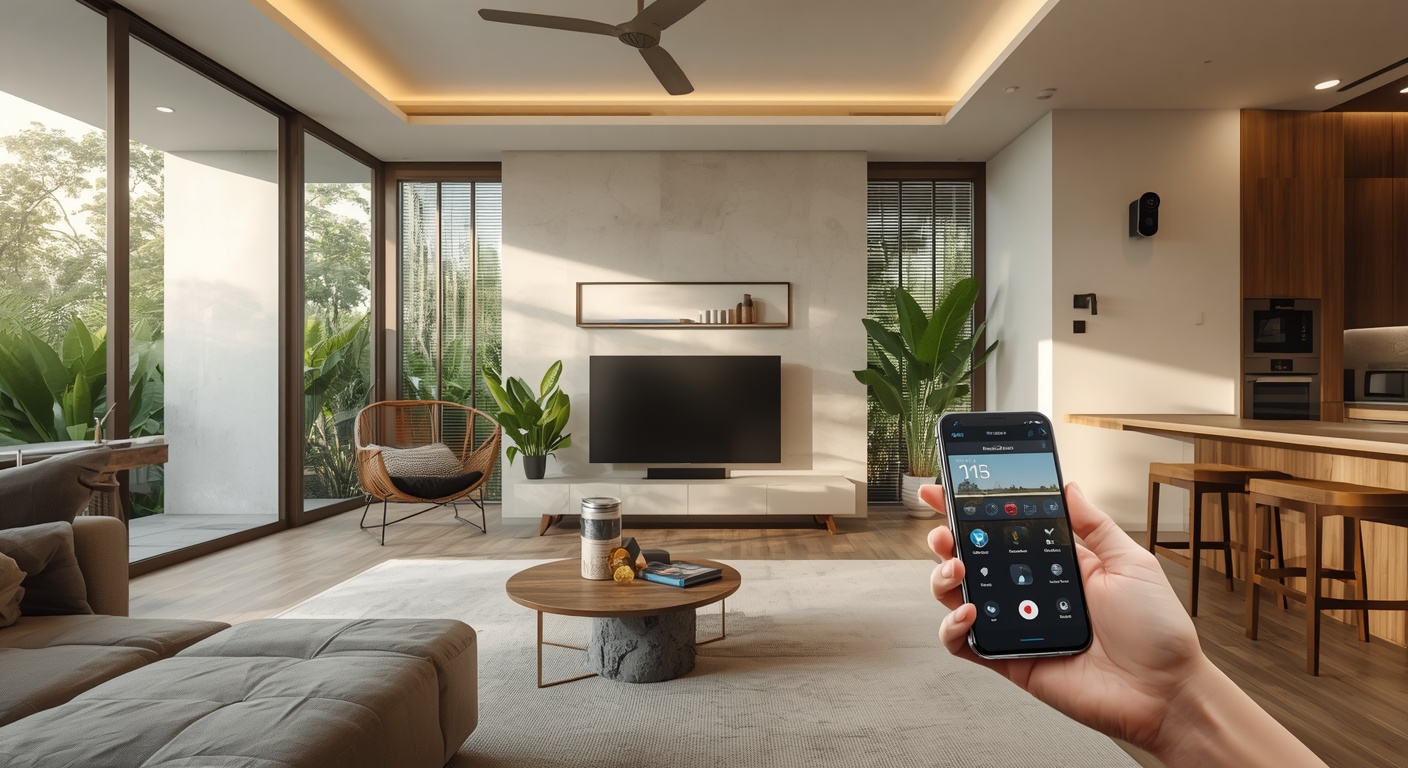
A smart home malaysia setup can make daily life more convenient, safer and more energy-efficient, whether you live in a condo, terrace house, semi-D or landed family home. From smart lighting and video doorbells to app-controlled air conditioners and robot vacuums, smart home systems are becoming more practical for Malaysian households. The key is to choose devices that match your home layout, internet reliability, budget and daily routines instead of buying gadgets you may never use.
This guide explains what a smart home is, which devices are worth considering, how to plan your setup, common costs in Malaysia, and how to avoid expensive mistakes. If you are renovating, it also helps to coordinate your smart home planning with your home renovation guide malaysia so wiring, power points and internet coverage are handled properly from the start.
What is a smart home?
A smart home uses connected devices that can be monitored, automated or controlled through a mobile app, voice assistant, remote control or sensor. These devices usually communicate through Wi-Fi, Bluetooth, Zigbee, Z-Wave, Thread or a brand-specific hub.
In practical terms, a smart home can let you:
- Turn lights on and off remotely
- Set air conditioning schedules before you get home
- Monitor your gate, front door or porch with cameras
- Receive alerts for motion, smoke or water leaks
- Lock doors digitally for family members or tenants
- Run curtains, plugs or appliances automatically
- Track electricity usage more conveniently
For Malaysian homeowners, a good smart home setup should work reliably with local electrical standards, typical Unifi, Maxis, TIME or CelcomDigi home internet connections, and the realities of heat, humidity and occasional power interruptions.
Why smart homes are becoming popular in Malaysia
Smart home adoption in Malaysia is growing because many homeowners want better security, comfort and energy control. Rising awareness of electricity use, more affordable devices, and easier app integration have made entry-level setups much more accessible than before.
Common local reasons for going smart include:
- Security for landed homes: Cameras, motion sensors and video doorbells are especially useful for porches, gates, back lanes and side entrances.
- Convenience for condos: Smart locks, lighting, plugs and robot vacuums are easy upgrades without major hacking work.
- Cooling control: Air-conditioning is a major part of Malaysian living, so smart IR controllers and thermostats can help with comfort and scheduling.
- Family support: Elderly parents and children can benefit from simple routines such as hallway night lights, door sensors and emergency alerts.
- Remote monitoring: Owners of rental units, holiday homes or balik kampung empty houses can check their property from anywhere.
Best smart home devices for Malaysian homes
1. Smart lighting
Smart bulbs, switches and dimmers are often the easiest first step. You can create routines for evening lighting, bedtime shutoff and welcoming lights when arriving home. For Malaysia, this is useful in porch areas, car porches, balcony lighting and living rooms.
Choose smart bulbs if you want a simple DIY setup. Choose smart wall switches if you want family members to use lights normally from the wall without depending on the app. Smart switches are often better for shared households.
2. Smart plugs
Smart plugs are affordable and flexible. They can schedule table lamps, water dispensers, fans, air purifiers and some small appliances. They are useful for testing automation before investing in a full system.
Always check plug type, local voltage compatibility and the maximum load rating. Avoid using low-quality smart plugs for high-power appliances.
3. Security cameras and video doorbells
These are among the most useful devices for Malaysian homes. Outdoor cameras can monitor gates, porches and side access, while indoor cameras can keep an eye on pets, children or empty units. Video doorbells help filter visitors, delivery riders and unexpected callers.
Look for features like night vision, motion zones, cloud or local storage, two-way audio and weather resistance for outdoor placement.
4. Smart locks and digital door access
Smart locks are increasingly popular for condos and landed homes. They may use PIN codes, fingerprint access, RFID cards or app control. This can be convenient for families, homestay owners, and homeowners who want to avoid carrying keys.
Before buying, confirm door compatibility, lock body size, emergency battery backup and after-sales support in Malaysia.
5. Smart air-conditioning control
Since air-conditioning is essential in many Malaysian homes, smart AC control can deliver real value. If your unit has no built-in smart features, an IR blaster or smart AC controller can let you turn it on before arrival, set schedules and avoid leaving it running too long.
This works best when paired with routines such as switching on the bedroom AC 20 minutes before bedtime or turning off the living room AC after everyone leaves.
6. Robot vacuums and smart cleaning devices
Robot vacuums are especially useful for homes with tiles, vinyl flooring, pets or busy work schedules. They are popular in condos and double-storey homes where daily floor cleaning is time-consuming. If you are comparing household upgrades, you may also want to review the best home appliances malaysia for practical choices that fit your lifestyle.
7. Smart sensors
Door sensors, motion sensors, leak sensors and smoke detectors add useful automation and safety. For example, a door sensor can alert you if the back door opens late at night. A water leak sensor can help near washing machines, water heaters or kitchen sinks.
8. Smart curtains, blinds and gates
These are more advanced upgrades and are often best planned during renovation. Motorised curtains are useful for large windows, while smart gate integration can help landed homeowners manage entry with more convenience.
How to plan a smart home setup properly
The best way to build a smart home is to start with your needs, not the devices. A practical plan prevents wasted spending and frustrating compatibility issues.
Step 1: Identify your goals
Ask yourself what problem you want to solve:
- Better home security?
- Lower electricity waste?
- More convenience for family members?
- Automation for lighting and cooling?
- Remote monitoring while travelling?
Your goals will shape your device priorities.
Step 2: Check your home type and layout
A condo unit may only need strong router coverage and a few devices. A double-storey or larger landed home may need mesh Wi-Fi, additional access points and careful camera placement. Thick walls, metal gates and outdoor distances can affect signal reliability.
Step 3: Choose your ecosystem
Try to avoid mixing too many brands unless you are sure they work together. Common ecosystems include Google Home, Amazon Alexa and Apple Home. Some homeowners also use brand-based apps only. Pick one main ecosystem for easier automation.
Step 4: Prioritise room by room
A smart home does not need to be installed all at once. Start with the spaces that matter most:
- Front door or gate security
- Living room lighting and air-conditioning
- Main bedroom comfort and lighting
- Kitchen or utility area safety sensors
- Outdoor camera coverage
Step 5: Plan power points and internet coverage
If you are renovating, this is the best time to add power points for cameras, routers, hubs, curtain motors and charging stations. You should also think about concealed wiring, DB box capacity and backup access if a device fails. This is especially important when budgeting because smart upgrades can affect your total house renovation cost malaysia.
DIY smart home vs professional installation
In Malaysia, many entry-level smart devices can be installed DIY, especially bulbs, plugs, indoor cameras and IR controllers. However, some setups are better handled by professionals.
DIY is suitable for:
- Smart bulbs and portable lamps
- Smart plugs
- Indoor Wi-Fi cameras
- Robot vacuums
- Basic voice assistant setup
Professional installation is better for:
- Smart switches that involve electrical wiring
- Digital locks on main doors
- Motorised curtains or blinds
- Outdoor CCTV with cable routing
- Integrated alarm systems
- Gate automation and intercom systems
If your home is being redesigned, it also helps to align smart features with your layout and daily habits through an interior design malaysia guide approach so lighting scenes, furniture placement and device locations work together.
How much does a smart home setup cost in Malaysia?
Smart home costs in Malaysia vary widely depending on the brand, number of rooms, level of automation and whether you need rewiring or professional installation. There is no single standard price, but homeowners can think in terms of entry-level, mid-range and advanced setups.
Entry-level setup
This usually includes a few smart bulbs or switches, a smart plug, an indoor camera and a voice assistant. It is suitable for condos, small apartments or first-time users who want to try automation without major work.
Mid-range setup
This may include several lighting zones, more cameras, smart lock access, AC control, sensors and a stronger Wi-Fi network. This level suits most family homes that want meaningful convenience and security.
Advanced setup
This can include a full lighting system, curtain motors, alarm integration, multi-camera coverage, gate or intercom control, room-by-room automation and centralised scenes such as away mode, sleep mode and holiday mode.
Your total cost can be affected by:
- Number of devices and rooms
- Brand and ecosystem choice
- Need for hubs, mesh Wi-Fi or controllers
- Electrical rewiring or extra power points
- Installation labour
- Subscription fees for cloud storage or monitoring
| Setup Level | What It Usually Includes | Best For |
|---|---|---|
| Entry-level | Basic lights, plugs, one or two cameras, simple app control | Beginners, condos, renters |
| Mid-range | Security devices, AC control, switches, sensors, better Wi-Fi coverage | Families, owner-occupied homes |
| Advanced | Integrated automation, curtain motors, locks, scenes, wider coverage | Larger homes, full renovation projects |
It is smart to budget not just for device purchase, but also for maintenance, replacement batteries, internet upgrades and occasional troubleshooting.
Do smart home devices work in Malaysia?
Yes, most mainstream smart home devices can work well in Malaysia, but you should confirm a few basics before buying.
Electrical compatibility
Malaysia uses 240V and Type G plugs. Always check voltage support, plug format and safety certification. Imported devices may need adapters or may not be ideal for local use.
Internet and Wi-Fi coverage
Most smart devices rely on stable home internet and strong internal Wi-Fi coverage, especially for cameras and live streaming. In larger homes, a mesh Wi-Fi system is often more important than adding more smart devices.
Cloud access and app region
Some products work differently depending on app region settings or cloud availability. Buy from reliable local sellers where possible so warranty support is easier.
Weather durability
For outdoor devices, check for heat and rain resistance. Malaysian humidity and strong sun can shorten the lifespan of cheap products, especially if installed at exposed gates or porches.
Common mistakes to avoid
- Buying too many devices too quickly: Start small and test what your family actually uses.
- Ignoring Wi-Fi strength: Weak signal causes many smart home problems.
- Mixing incompatible ecosystems: This can make automation confusing.
- Overlooking manual use: Switches, locks and controls should still be practical for guests and older family members.
- Choosing based on price alone: Cheap devices may have poor apps, weak security or no local support.
- Skipping backup planning: Think about what happens during internet outages or power cuts.
- Not securing accounts: Weak passwords can expose cameras and home access devices.
Smart home security tips for homeowners
A connected home should also be a secure home. Follow these basic precautions:
- Use strong, unique passwords for your apps and Wi-Fi
- Enable two-factor authentication where available
- Update device firmware regularly
- Create a separate guest or IoT network if your router supports it
- Buy from brands with regular software support
- Turn off features you do not need
- Review app permissions and camera sharing access
- Replace default usernames and passwords immediately
Security should also be part of your broader upkeep planning, along with routine checks from a home maintenance checklist malaysia so your doors, windows, wiring and water points remain in good condition.
Simple smart home checklist for Malaysian homeowners
- Define your top 3 goals for going smart
- Choose one main ecosystem
- Check home Wi-Fi coverage in all important areas
- Confirm voltage, plug type and local compatibility
- Start with high-use devices like lights, cameras or AC control
- Plan for family-friendly controls, not app-only access
- Set a realistic budget for devices and installation
- Think about backup access during internet or power issues
- Secure all accounts and update firmware
- Expand only after your first setup works reliably
Examples of practical smart home setups
Condo starter setup
- Smart lock on main door
- Living room smart lighting
- Bedroom AC with IR controller
- Indoor camera facing entrance
- Robot vacuum for routine cleaning
Terrace house family setup
- Outdoor cameras at gate and porch
- Video doorbell
- Smart switches for living and dining areas
- Leak sensor in kitchen or yard area
- Bedroom and living room AC automation
Renovation-based advanced setup
- Concealed wiring for cameras and network points
- Motorised curtains
- Digital lock and gate access integration
- Scene control for away mode and sleep mode
- Mesh Wi-Fi across all floors
FAQ
What is the best way to start a smart home in Malaysia?
The best way is to start with one or two practical needs, such as better security or easier lighting control. Most homeowners should begin with smart lights, plugs, cameras or AC control rather than a full-home system. Make sure your Wi-Fi is stable, choose one main ecosystem, and test a few devices before expanding.
Which smart home devices are most useful for Malaysian homes?
The most useful devices usually include security cameras, video doorbells, smart locks, smart lighting, smart plugs and air-conditioner controllers. For many Malaysian households, these give the best mix of convenience, safety and energy control. Robot vacuums and leak sensors are also helpful in busy family homes.
How much does a smart home setup cost in Malaysia?
Costs vary based on the device type, home size and level of automation. A simple starter setup can be relatively affordable, while a larger integrated system with rewiring, curtain motors, digital locks and multiple cameras will cost more. Homeowners should budget for devices, installation, Wi-Fi upgrades and possible subscription fees.
Do smart home devices work well with Malaysian internet and electrical systems?
Yes, most devices can work well in Malaysia if they support local voltage and plug types and if your home internet is stable. For larger homes, mesh Wi-Fi may be necessary to keep devices connected reliably. Always check compatibility before buying, especially for imported products.
How can homeowners keep their smart home system secure?
Use strong passwords, enable two-factor authentication, update firmware regularly and avoid buying unsupported no-brand devices. A separate Wi-Fi network for smart devices can improve security. It is also wise to review who has access to your cameras, locks and shared controls.
Conclusion
A smart home malaysia setup does not need to be complicated or expensive to be useful. The best results come from solving real everyday problems, such as improving front door security, making cooling more efficient, or simplifying lighting for the family. Start with reliable basics, build around a strong Wi-Fi network, and expand gradually as your needs become clearer.
Whether you are upgrading an existing home or planning smart features during renovation, a thoughtful approach will save money and reduce frustration. Focus on compatibility, security, family usability and local support, and your smart home will be far more practical in the long run.

