
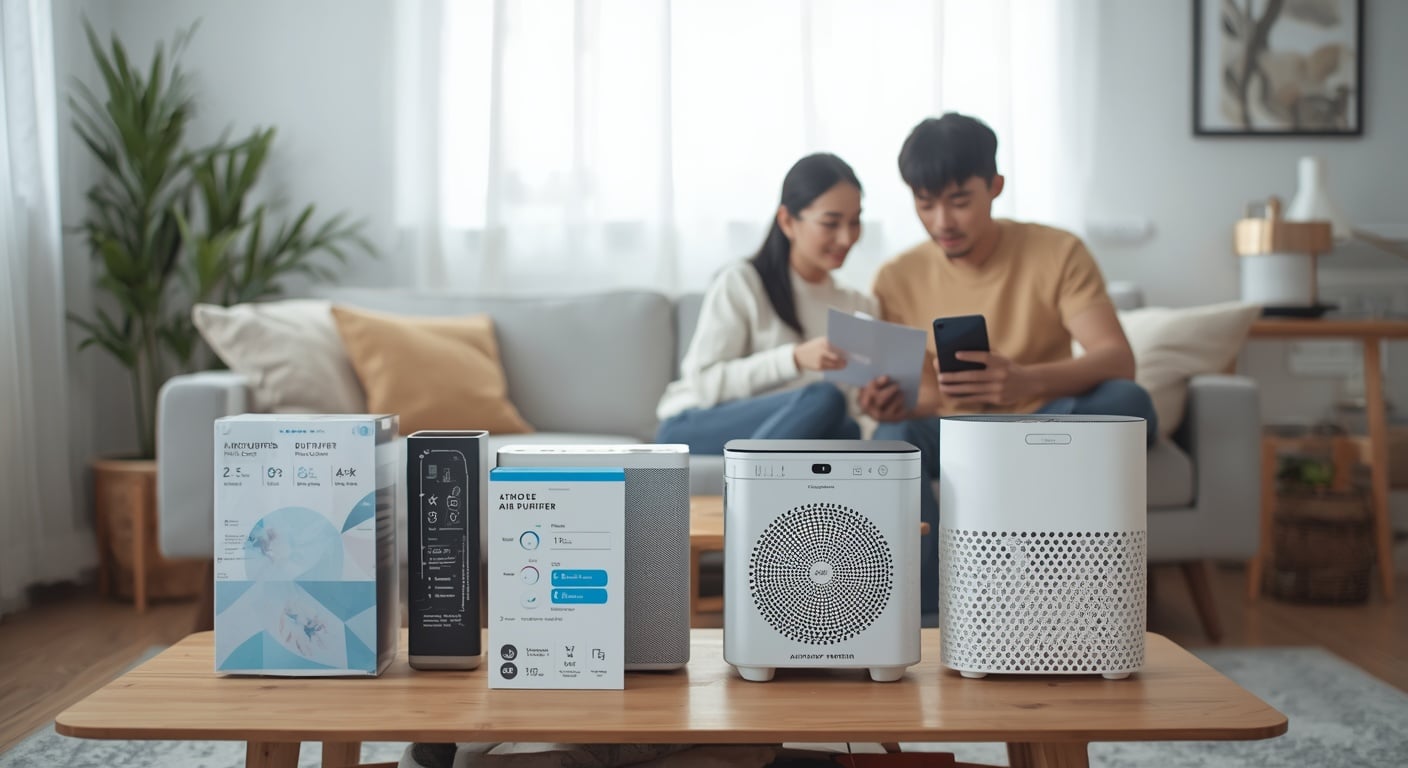
If you are wondering how to choose an air purifier for your home, the best place to start is by matching the purifier to your room size, household needs, and the type of air problem you want to solve. In Malaysia, common concerns include haze, dust from nearby roads or renovation work, pet dander, cooking odours, and high humidity that can make indoor air feel stale. A good air purifier can help, but only if you pick the right type, filter system, and capacity for your space.
This guide explains what to look for before you buy, what features matter most, and what mistakes to avoid so you can choose a model that actually improves indoor air quality.
Start by identifying the air problem in your home
Before comparing brands or features, think about what you want the purifier to do. Air purifiers are not all designed for the same job. Some are better for fine particles such as PM2.5 during haze season, while others are more useful for homes with pets, smokers, or strong kitchen smells.
Ask yourself these questions:
- Do you need help with haze, dust, pollen, or general airborne particles?
- Is someone in the home sensitive to allergies, asthma, or pet dander?
- Are odours from cooking, tobacco smoke, or nearby traffic the main issue?
- Is the purifier for a bedroom, nursery, living room, or open-plan area?
- Do you need it to run quietly at night?
For example, a family living near a busy road in Kuala Lumpur may need strong particle filtration for dust and vehicle pollution. A condo owner with cats may care more about pet hair, dander, and smell. If you recently completed works at home, you may also want to review a broader home maintenance checklist in Malaysia to keep indoor air cleaner after dust-producing activities.
Choose the right filter type for your needs
The filter system is one of the most important parts of an air purifier. If you only compare price or appearance, you may end up with a unit that does very little.
HEPA filter
A true HEPA filter is generally the best choice for trapping fine airborne particles such as dust, pollen, mould spores, pet dander, and haze-related particles. For most Malaysian homes, this is the most useful filter to prioritise.
Activated carbon filter
If odours are a concern, look for an activated carbon filter. This helps reduce smells from cooking, smoke, pets, and some household chemicals. A HEPA filter handles particles, while carbon helps with gases and smells, so many households benefit from both.
Pre-filter
A washable or replaceable pre-filter catches larger particles like hair and bigger dust. This can help extend the life of the main filter, especially in homes with pets.
UV, ioniser, and extra technologies
Some purifiers include UV light, ionisers, or similar add-on features. These may sound impressive, but they should not be the main reason you buy a unit. Focus first on solid HEPA and carbon filtration. If a purifier includes an ioniser, check whether it can be turned off and whether it suits your preferences.
A simple rule is this: for most homes, a purifier with a HEPA filter, carbon filter, and suitable room coverage is a safer practical choice than one that relies heavily on marketing features.
Match the purifier to your room size and layout
One of the biggest buying mistakes is choosing a purifier that is too small for the space. A compact unit may work well in a bedroom but struggle in a large living room with high airflow, open doors, or frequent cooking activity.
Check the manufacturer’s recommended room size and clean air delivery details. Even if a model claims to cover a large area, think about real-life conditions in your home:
- Open-plan living and dining areas usually need higher capacity
- Rooms with curtains, rugs, and soft furnishings may trap more dust
- Homes near roads or construction sites may need stronger performance
- Bedrooms can often use a quieter, smaller model if the room is enclosed
If your space is between two capacity options, it is often better to choose the larger unit. This allows the purifier to clean the air more effectively without always running at maximum speed.
Here is a simple guide:
| Room Type | What to Look For |
|---|---|
| Small bedroom | Compact unit, quiet sleep mode, HEPA filter |
| Master bedroom | Medium coverage, low noise, easy filter replacement |
| Living room | Higher airflow, strong particle filtration, carbon filter for odours |
| Nursery | Quiet operation, simple controls, reliable filter system |
| Open-plan condo | Larger capacity or more than one purifier for better coverage |
If you are moving into a new property, it may also help to review a first homeowner checklist in Malaysia so air quality planning becomes part of your setup from the start.
Look at operating cost, maintenance, and noise
An air purifier is not a one-time cost. To keep working properly, it needs regular filter replacement and sensible daily use. A cheaper machine can become expensive if replacement filters are costly or hard to find in Malaysia.
Filter replacement
Check how often the HEPA and carbon filters need changing. This depends on use, air quality, and the model itself. During haze season or in dusty areas, filters may need attention sooner. Make sure replacements are easy to buy locally or through reliable online sellers.
Electricity use
Most home air purifiers do not use as much power as large appliances, but they often run for many hours each day. If you plan to use one in a bedroom overnight and another in the living room during the day, power efficiency matters.
Noise level
Noise can make a good purifier annoying to live with. A strong machine on high speed may clean quickly, but if it is too loud for sleep or work, you may not use it consistently. For bedrooms, look for sleep mode or low-noise operation. For living areas, moderate fan sound is usually acceptable as long as it is not intrusive.
Ease of cleaning
A purifier that is difficult to open, clean, or maintain may be neglected over time. Look for a design that allows easy access to filters and a clear replacement indicator.
If you are comparing home electronics more broadly, you may find it useful to browse this guide to best home appliances in Malaysia when planning practical household purchases.
Useful features that genuinely help
Not every extra feature is necessary, but some can make daily use easier and more effective.
Air quality sensor
A built-in sensor can detect changes in indoor air quality and adjust fan speed automatically. This is useful during haze periods, heavy cooking, or when dust levels rise after cleaning.
Auto mode
Auto mode helps balance performance and energy use. Instead of manually adjusting speeds throughout the day, the machine responds to conditions on its own.
Sleep mode
For bedrooms, sleep mode lowers fan noise and dims display lights. This is especially helpful for light sleepers, children, or babies.
Filter replacement indicator
This removes guesswork and helps you maintain performance. A purifier with dirty filters cannot work efficiently.
Child lock
A useful feature for homes with young children who may press buttons or change settings.
Smart controls
App control is convenient if you already use connected devices at home, but it should be a bonus rather than a must-have. Reliable filtration matters more than smart features. If you are building a more connected household, you can explore this smart home guide for Malaysia for wider planning ideas.
Pro Tips and common mistakes to avoid
Buying the right purifier is only half the job. How you place and use it also affects results.
Pro Tips
- Place the purifier where airflow is not blocked by curtains, furniture, or walls
- Keep doors and windows closed when outdoor air quality is poor, especially during haze
- Run the purifier consistently instead of only turning it on when the air feels bad
- Use a suitable unit in the room where people spend the most time, usually the bedroom or living room
- Vacuum and clean regularly so the purifier is not trying to handle all the dust alone
Common Mistakes
- Choosing a unit based only on price without checking filter quality
- Buying a purifier that is too small for the room
- Expecting it to solve humidity or mould problems on its own
- Ignoring filter replacement costs
- Placing it in a corner with poor airflow
It is also important to understand what an air purifier cannot do. It does not replace ventilation, routine cleaning, or moisture control. If your home has dampness issues, you may need a dehumidifier or better ventilation as well. If you are renovating, dust control and material choices also matter for indoor air quality, and these should be considered alongside your wider home improvement plans.
Quick checklist before you buy
- Identify whether your main problem is particles, odours, pet dander, or haze
- Choose a purifier with a true HEPA filter for particle removal
- Add activated carbon if odours or smoke are concerns
- Check the recommended room size carefully
- Consider noise level for bedrooms and nurseries
- Review filter replacement availability and cost in Malaysia
- Look for useful features like auto mode, sleep mode, and filter indicators
- Plan proper placement and regular cleaning for best results
FAQ
1. What is the most important feature when choosing an air purifier?
For most homes, the most important feature is a reliable HEPA filter combined with room coverage that matches your space. If you also want to reduce smells, choose a model with activated carbon.
2. Do I need an air purifier in Malaysia if I already use air conditioning?
Air conditioning helps cool the room, but it does not necessarily remove fine particles, allergens, or odours effectively. An air purifier complements your air conditioner by helping improve indoor air quality.
3. Can an air purifier help during haze season?
Yes, a good air purifier with HEPA filtration can help reduce fine airborne particles indoors during haze season, especially when windows and doors are kept closed as much as possible.
4. Is a bigger air purifier always better?
Not always, but choosing a unit with enough capacity for your room is important. A slightly larger model can be a better choice because it may clean the air more efficiently at lower fan speeds.
5. Can an air purifier remove mould and humidity?
An air purifier can help capture some airborne mould spores, but it does not remove the moisture causing mould growth. If humidity is high, you may also need better ventilation or a dehumidifier.
Choosing the right air purifier comes down to understanding your home, your air quality concerns, and the practical costs of daily use. If you focus on filter quality, room size, maintenance, and realistic features, you will be far more likely to buy a purifier that genuinely helps your household breathe easier.


