
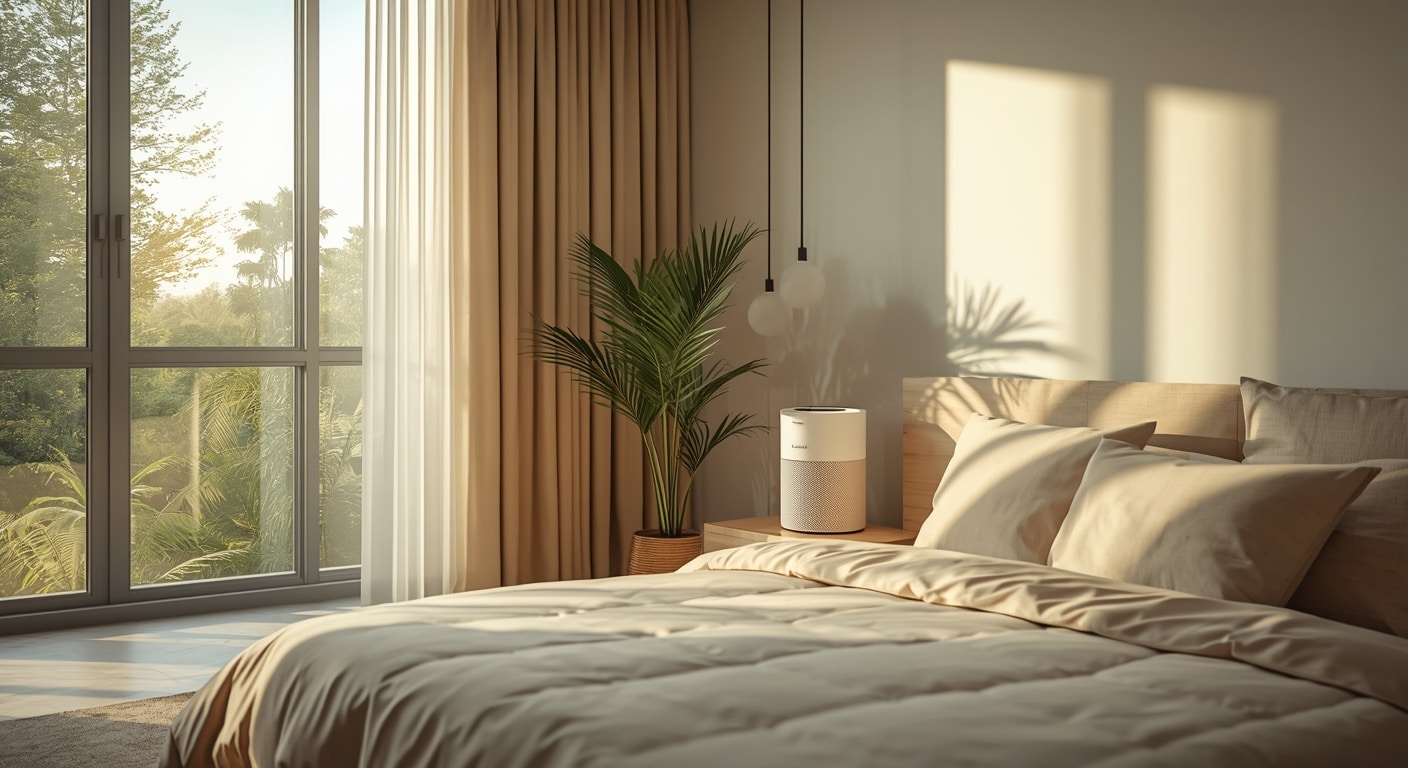
Choosing the best air purifier for bedroom Malaysia is not just about buying the most expensive model. For most Malaysian homeowners, the real goal is simple: cleaner air, better sleep, less dust, and quieter operation in a room where you spend many hours every night. Bedrooms in Malaysia often deal with fine dust, pet dander, haze, humidity, and limited ventilation, especially in condos and urban homes. A good air purifier can help, but only if you pick the right type, size, and features for your room.
This guide explains what to look for before you buy, so you can compare options more confidently and avoid paying for features you may not need.
1. Start with your bedroom size and room layout
The first thing to check is whether the air purifier is suitable for your bedroom size. Many buyers focus on appearance or price first, but a unit that is too small for the room will not clean the air effectively.
Look at the purifier’s recommended room coverage or CADR (Clean Air Delivery Rate). In Malaysian bedrooms, a small room may be around 100 to 150 square feet, while a master bedroom can be 200 square feet or more. If your room has a high ceiling, attached wardrobe area, or is often kept closed with air-conditioning on, it is usually better to choose a slightly stronger unit.
What to check
- Room coverage: Match the purifier to your actual bedroom size, not your whole house.
- CADR rating: Higher CADR usually means faster cleaning.
- Air changes per hour: A unit that can clean the room air several times per hour is more useful for sleeping spaces.
If your bedroom door stays closed at night, the purifier mainly needs to handle that single room. If you leave the door open or the room connects to a study or dressing area, size up.
For homeowners reviewing other essential household upgrades, it can also help to compare appliances more broadly through this best home appliances Malaysia guide.
2. Choose the right filter type for Malaysian homes
Not all air purifiers work the same way. The best choice depends on what you are trying to remove from the air in your bedroom.
HEPA filter
A true HEPA filter is usually the most important feature for bedroom use. It helps trap fine dust, pollen, pet dander, and other small airborne particles. This is useful for homes near busy roads, construction areas, or places affected by seasonal haze.
Activated carbon filter
If your bedroom has smells from cooking, traffic, pets, or nearby drains, an activated carbon filter helps reduce odours and some gases. This is especially useful in apartments where smells can travel from other units or common corridors.
Pre-filter
A washable pre-filter helps catch larger dust and hair before they reach the main filter. This can extend filter life and reduce maintenance costs.
UV, ioniser, and extra features
Some models promote UV light, ionisers, or other add-ons. These may sound impressive, but for a typical bedroom, the most important combination is still a reliable particle filter and, if needed, a carbon filter. If a model includes an ioniser, make sure you understand whether it can be turned off, especially if you prefer a simpler setup.
In short, for most Malaysian bedrooms, the safest buying priorities are:
- HEPA-level particle filtration
- Carbon filter if odours matter
- Easy filter replacement and cleaning
3. Prioritise low noise for better sleep
A bedroom air purifier should clean the air without disturbing your sleep. Noise is one of the biggest reasons people stop using their purifier at night, even if the cleaning performance is good.
Check the noise level in decibels, especially on low or sleep mode. Some units are quiet on the lowest setting but become too loud on medium or high speed. If you are a light sleeper, this matters a lot.
What works best in a bedroom
- Sleep mode: Reduces fan speed and dims display lights.
- Low-light or display-off setting: Helpful if you are sensitive to bright LED screens.
- Stable fan sound: A soft, steady hum is usually easier to sleep with than a changing fan speed.
If your area is dusty or affected by haze, you may need to run the purifier on higher speed for a while before bedtime, then switch to sleep mode overnight. This gives you cleaner air without too much noise during sleep.
4. Consider Malaysia-specific issues: haze, humidity, dust, and air-conditioning
Malaysian bedrooms face conditions that can affect purifier performance. Understanding these issues helps you buy more wisely.
Haze season
During haze periods, indoor air can worsen if windows are opened often or if your home has gaps around doors and frames. In these periods, an air purifier with a strong particle filter and suitable room coverage becomes more important. Keep windows closed as much as possible when outdoor air quality is poor.
Humidity
Air purifiers are not dehumidifiers. Many homeowners confuse the two. If your bedroom feels damp, smells musty, or has signs of mould, a purifier alone may not solve the issue. You may need better ventilation, air-conditioner maintenance, or a dehumidifier depending on the problem.
Routine upkeep around the home also makes a difference. This home maintenance checklist Malaysia can help you spot issues like dust build-up, poor ventilation, and neglected air-conditioning that affect bedroom air quality.
Air-conditioned bedrooms
In Malaysia, many people sleep with the air-conditioner on and windows closed. This can help the purifier work more efficiently because the room is more sealed. However, you should still clean your air-conditioner filters regularly, because the purifier does not replace proper AC maintenance.
Urban dust and renovation exposure
If you live near roads, new developments, or ongoing renovation works, fine dust can build up quickly in the bedroom. In these cases, a purifier with a good pre-filter and HEPA filter is usually more valuable than one with extra smart features.
If your home has recently gone through upgrading work, this home renovation guide Malaysia may help you plan post-renovation cleaning and maintenance more effectively.
5. Check running cost, maintenance, and ease of use
The purchase price is only part of the cost. A bedroom air purifier works best when used consistently, so you should also think about filter replacement, electricity use, and daily convenience.
Filter replacement cost
Before buying, check:
- How often the filter needs replacing
- Whether replacement filters are easy to find in Malaysia
- Whether the model uses one combined filter or separate filters
A cheaper unit with costly or hard-to-find filters may be less practical in the long run.
Electricity use
Because bedroom purifiers may run for 6 to 10 hours every night, energy efficiency matters. A model with efficient sleep mode can be more practical for daily use, especially if you already run an air-conditioner and other appliances overnight.
Ease of cleaning
A purifier should be easy to wipe down, move, and open for filter checks. If the pre-filter is washable, that can save money and help maintain airflow.
Useful convenience features
- Timer function
- Filter replacement indicator
- Auto mode with air quality sensor
- Child lock if you have young children
- App control if you prefer smart home integration
Smart controls are optional, but some homeowners may appreciate them, especially if they already use connected devices. If that sounds useful, this smart home guide Malaysia explains how smart features can fit into a modern home setup.
6. Pro tips and a simple bedroom air purifier checklist
Once you narrow down your choices, use these practical tips to decide which model suits your bedroom best.
Pro Tips
- Buy for your actual sleeping habits: If you need silence, prioritise low-noise performance over extra features.
- Do not overspend on unnecessary technology: For most bedrooms, filtration quality and proper sizing matter more than premium design.
- Place the unit correctly: Leave space around the purifier so air can circulate properly. Do not block it behind curtains or furniture.
- Run it consistently: Air purifiers work best when used daily, not only when the room feels dusty.
- Fix the source where possible: Wash bedding regularly, vacuum curtains, clean fan blades, and maintain your AC. The purifier works better as part of an overall bedroom cleaning routine.
Quick checklist before you buy
| What to Check | Why It Matters |
|---|---|
| Room coverage | Ensures the purifier can handle your bedroom size |
| HEPA filter | Helps trap fine dust, pollen, and dander |
| Carbon filter | Useful for reducing odours |
| Noise level | Important for uninterrupted sleep |
| Sleep mode | Reduces sound and display brightness at night |
| Filter cost and availability | Affects long-term ownership cost |
| Energy use | Matters for nightly operation |
| Easy maintenance | Makes regular use more practical |
The best air purifier is not always the one with the longest feature list. It is the one that fits your room, solves your bedroom air problem, and is comfortable enough to run every night.
FAQ
Is an air purifier worth it for a bedroom in Malaysia?
Yes, especially if your bedroom gets dusty easily, you have allergies, pets, nearby traffic, or occasional haze exposure. A properly sized purifier with a good particle filter can make the room more comfortable and may help improve sleep quality.
What size air purifier do I need for a bedroom?
You should match the unit to your bedroom’s actual floor area and layout. If your room is larger, has high ceilings, or connects to another space, consider choosing a model with slightly higher coverage than the minimum requirement.
Do I need a HEPA filter for a bedroom air purifier?
For most people, yes. A HEPA-type filter is one of the most useful features because it helps capture fine particles such as dust, pollen, and pet dander, which are common bedroom irritants.
Can an air purifier remove humidity or mould in the bedroom?
No, an air purifier is not a dehumidifier. It may help reduce some airborne particles, but it will not remove moisture from the room. If your bedroom has dampness or mould issues, you should also improve ventilation and address the source of moisture.
Should I run the air purifier all night?
Yes, many people run it throughout the night, especially in sleep mode. Continuous use is usually more effective than switching it on only when the room feels stuffy or dusty. Just make sure the noise level is comfortable and the filters are maintained properly.


