
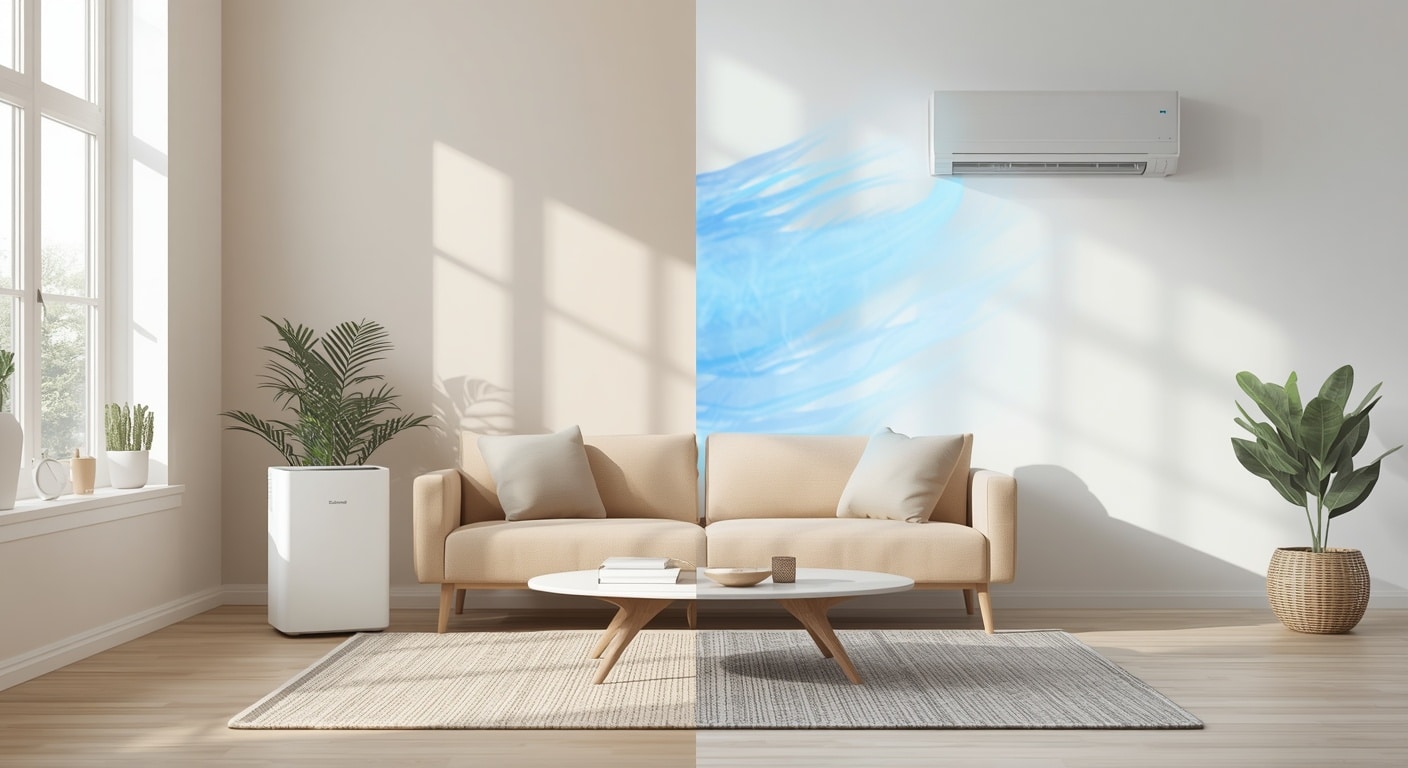
When comparing air purifier vs air conditioner, many Malaysian homeowners assume they do the same job because both can make a room feel more comfortable. In reality, they solve different problems. An air conditioner cools and removes some humidity, while an air purifier helps clean the air by trapping dust, allergens, smoke particles, and other airborne pollutants. If you are deciding which one to buy for your home, the right choice depends on whether your main concern is heat, indoor air quality, or both.
In Malaysia’s hot and humid climate, this matters more than many people realise. Condos, terrace houses, and high-rise units often face issues like trapped heat, dust from nearby roads, cooking smells, pet dander, haze, and mould risk. Understanding the difference can help you spend your budget wisely, especially if you are already planning home upgrades using a Home Renovation Guide Malaysia or comparing appliances in this Best Home Appliances Malaysia resource.
What an Air Conditioner Actually Does
An air conditioner is designed mainly to control temperature. It cools indoor air by removing heat from the room and releasing it outside. Most home units in Malaysia also help reduce indoor humidity, which can make a room feel less sticky and more comfortable.
What an air conditioner does well:
- Cools the room quickly
- Reduces humidity to improve comfort
- Helps you sleep better in hot weather
- Can improve comfort in closed rooms with poor airflow
What it does not do well:
- It does not properly remove fine pollutants like PM2.5 unless paired with a strong filter system
- It does not fully solve dust, pet dander, pollen, or smoke issues
- It can circulate dirty air if filters are not cleaned regularly
Many people think their aircon already cleans the air because it has a basic mesh filter. That filter mainly catches larger dust particles and protects the unit itself. It is not the same as the multi-stage filtration found in a dedicated air purifier.
What an Air Purifier Actually Does
An air purifier is made to improve indoor air quality. It pulls in room air, passes it through filters, and releases cleaner air back into the space. Depending on the model, it may capture dust, pollen, pet hair, smoke particles, and other airborne irritants. This can be especially useful during haze season, in homes near busy roads, or for families with asthma and allergy concerns.
What an air purifier does well:
- Removes fine airborne particles more effectively than an aircon filter
- Helps reduce dust build-up in enclosed rooms
- Can improve comfort for people with allergies or mild respiratory sensitivity
- Useful in bedrooms, nurseries, study rooms, and living areas
What it does not do well:
- It does not cool the room
- It does not lower room humidity like an air conditioner
- It cannot fix poor ventilation or a mould problem caused by leaks
If your room feels hot and stuffy, an air purifier alone will not make it physically cooler. It may make the air feel fresher, but the temperature stays about the same.
Air Purifier vs Air Conditioner: The Key Differences
The easiest way to compare them is to look at the job each appliance is built to do.
| Feature | Air Conditioner | Air Purifier |
|---|---|---|
| Main purpose | Cools air and improves comfort | Cleans indoor air |
| Temperature control | Yes | No |
| Humidity reduction | Yes, to some extent | No |
| Dust and allergen removal | Limited | Much better |
| Smoke and haze particles | Limited | Better suited |
| Best for | Hot, humid rooms | Dusty, polluted, enclosed rooms |
So when asking whether you need an air purifier or air conditioner, start with the problem you are trying to solve:
- If your bedroom is too warm at night, choose an air conditioner.
- If your child keeps sneezing from dust or haze, choose an air purifier.
- If you want both cooler air and cleaner air, you may need both.
This is common in Malaysia, especially in urban homes where aircon is used daily but outdoor air quality is not always ideal.
Which One Should Malaysian Homeowners Buy First?
For most Malaysian homes, the air conditioner usually comes first because cooling is a daily need. Our climate is warm year-round, and indoor comfort can affect sleep, productivity, and overall quality of life.
However, there are situations where an air purifier should be the first purchase:
- You already have air conditioning but still notice dust, smells, or haze inside
- Someone at home has allergies, sinus issues, or mild asthma
- You live near a main road, construction area, or open burning zone
- You have pets and want cleaner bedroom air
- You keep windows closed most of the time
If you are moving into a new home, it helps to prioritise by room. For example:
- Bedroom: Aircon first for sleep comfort, purifier second if allergies are an issue
- Nursery or child’s room: Purifier can be a strong priority if air quality is a concern
- Living room: Aircon is useful for daily comfort, purifier helps if the area is often dusty
- Home office: Choose based on whether the room feels hot or stale
First-time buyers can also plan purchases alongside a broader home setup list such as this First Homeowner Checklist Malaysia guide.
When It Makes Sense to Use Both Together
In many Malaysian households, the best answer is not air purifier vs air conditioner, but air purifier and air conditioner. They work well together because each handles a different part of indoor comfort.
Using both makes sense when:
- You want a cool bedroom with cleaner breathing air
- You rely on aircon at night and keep windows closed
- You live in an area affected by haze or traffic pollution
- You want better comfort for elderly family members, babies, or allergy sufferers
Here is a practical example. If you sleep with the aircon on every night in a closed room, the room may be cool but still contain dust, fine particles, and stale air. A purifier can help cycle and filter the air while the aircon keeps the room comfortable.
To get better results from both:
- Place the air purifier where airflow is not blocked by curtains or furniture
- Keep doors and windows closed when running the purifier for best effect
- Clean aircon filters regularly so dirty dust does not keep circulating
- Choose a purifier sized for the actual room, not the whole house unless specified
If you are creating a healthier and more efficient home, you may also find value in a Smart Home Guide Malaysia approach, especially for automating cooling schedules and monitoring indoor comfort.
Common Mistakes Homeowners Make
Buying the wrong appliance often happens when homeowners expect one device to solve every problem. Here are common mistakes to avoid:
1. Expecting an air purifier to cool the room
An air purifier does not lower temperature like an aircon. If your room is hot, it will still be hot.
2. Assuming an aircon can replace a purifier
Basic aircon filters are not designed to handle fine particles the same way a dedicated purifier does.
3. Ignoring humidity and mould sources
If your home has damp walls, water leaks, or poor ventilation, neither appliance fully solves the root cause. You need to fix the moisture issue first.
4. Buying a unit that is too small for the room
A small purifier in a large living room may not perform well. The same goes for undersized air conditioning.
5. Forgetting maintenance
Dirty filters reduce performance. Aircon servicing and purifier filter replacement should be part of your routine. A regular Home Maintenance Checklist Malaysia can help you stay on track.
Quick Checklist Before You Buy
Use this short checklist to choose the right option:
- Is your biggest problem heat and humidity? Choose an air conditioner.
- Is your biggest problem dust, allergies, haze, or pet dander? Choose an air purifier.
- Do you already have aircon but the room still feels dusty or stuffy? Add a purifier.
- Will the unit be used in a bedroom, nursery, or home office? Check the room size carefully.
- Can you commit to cleaning or replacing filters on schedule? If not, performance will drop.
- Are there mould, leak, or ventilation issues? Solve those first before expecting appliance-only results.
For most homeowners, the decision becomes easier once you define the real problem inside the room. Cooling and clean air are related, but they are not the same.
FAQ
Can an air purifier replace an air conditioner in Malaysia?
No. An air purifier cannot cool a room or reduce the heat you feel during hot weather. It improves air quality, but it does not replace the comfort function of an air conditioner.
Is an air purifier necessary if I already have aircon?
It depends on your needs. If you have allergies, pets, frequent dust, or live in an area affected by haze or traffic pollution, an air purifier can still be useful even when you already have air conditioning.
Which is better for people with allergies?
An air purifier is generally better for allergies because it is designed to capture airborne particles such as dust and pollen more effectively than a standard aircon filter.
Does an air conditioner improve air quality?
Only in a limited way. It may trap some larger dust particles in its filter, but its main role is cooling. It is not a full air-cleaning solution.
Should I use both an air purifier and air conditioner in the same room?
Yes, if you want both cooler air and cleaner air. This setup is useful for bedrooms, nurseries, and enclosed spaces where windows are often kept shut.
For Malaysian homeowners, the choice between air purifier vs air conditioner comes down to a simple question: do you need cooler air, cleaner air, or both? If heat is the main issue, start with air conditioning. If air quality is the concern, choose a purifier. If your household deals with both hot nights and indoor dust or haze, using both together is often the most practical solution.


