
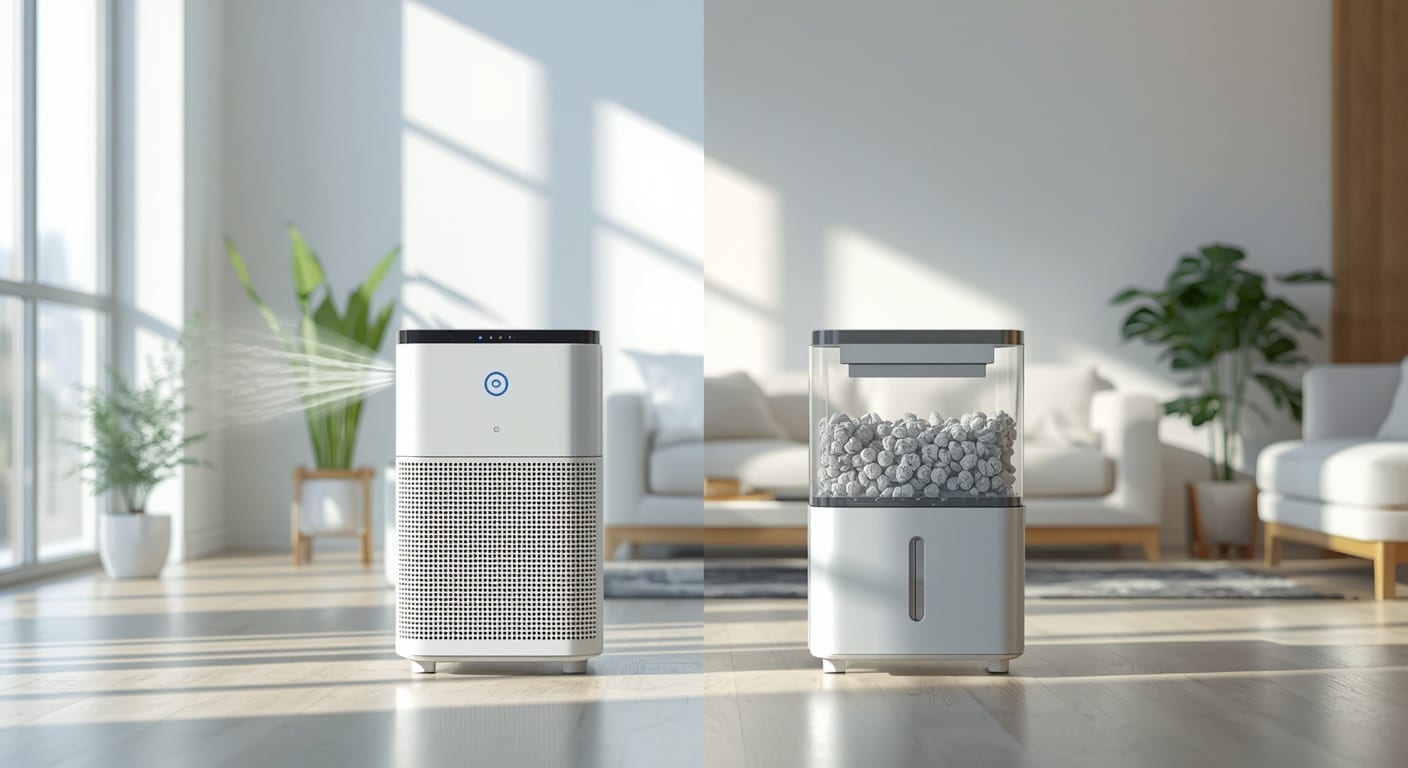
When comparing air purifier vs dehumidifier, the right choice depends on the actual problem in your home. In Malaysia, many homeowners deal with both haze particles and high indoor humidity, but these appliances solve different issues. An air purifier helps remove airborne pollutants such as dust, pet dander, smoke, and fine particles. A dehumidifier reduces excess moisture in the air, which can help with damp smells, condensation, and mould growth. If you buy the wrong one, you may spend money without fixing the root cause.
This guide explains what each appliance does, when to choose one over the other, and how to decide based on your room conditions, health concerns, and daily comfort.
What is the difference between an air purifier and a dehumidifier?
The biggest difference is simple: an air purifier cleans the air, while a dehumidifier removes moisture from the air.
| Feature | Air Purifier | Dehumidifier |
|---|---|---|
| Main purpose | Remove particles and some pollutants from indoor air | Reduce indoor humidity levels |
| Best for | Dust, smoke, pet dander, pollen, haze, odours | Damp rooms, musty smells, condensation, mould-prone spaces |
| How it works | Pulls air through filters | Pulls moisture from the air into a tank or drain |
| Helps allergies? | Yes, if triggered by airborne particles | Yes, if triggered by mould or dust mites linked to humidity |
| Removes mould spores? | Can capture airborne spores | Helps prevent mould growth by lowering moisture |
| Changes room humidity? | No | Yes |
Think of it this way: if your problem floats in the air, an air purifier is often the answer. If your problem comes from dampness, a dehumidifier is usually more useful.
When you need an air purifier
An air purifier is a better choice when the issue is indoor air quality. This is common in Malaysian homes near busy roads, construction areas, or during haze season. It is also helpful in households with pets, smokers, or family members with allergies.
Choose an air purifier if you notice:
- Fine dust settling quickly on furniture
- Allergy symptoms such as sneezing or itchy eyes indoors
- Pet fur and dander in bedrooms or living areas
- Outdoor haze or smoke entering the home
- Lingering odours from cooking or light smoke
Most homeowners should look for a unit with a true HEPA filter for particle removal. Some models also include activated carbon filters to help reduce odours. If you are still comparing features, an air purifier buying guide and appliance comparison can help you shortlist practical options for local homes.
Air purifiers are especially useful in bedrooms, nurseries, study rooms, and condos where windows stay closed for long hours because of traffic noise or outdoor heat.
When you need a dehumidifier
A dehumidifier is the better option when moisture is the real problem. Malaysia’s warm and humid climate makes this common, especially in ground-floor homes, shaded rooms, laundry areas, and bathrooms with poor airflow.
Choose a dehumidifier if you notice:
- Musty or damp smells
- Condensation on windows or walls
- Mould spots on ceilings, wardrobes, or corners
- Clothes taking too long to dry indoors
- A sticky or clammy feeling even with a fan running
Reducing humidity can also make air-conditioning feel more effective. That matters in many Malaysian homes where comfort depends on balancing cooling, moisture, and ventilation. If you suspect your home traps damp air, improving airflow matters too, and a home maintenance checklist for Malaysian homes is useful for spotting blocked vents, leaks, and moisture entry points.
A dehumidifier is often a smart choice for storerooms, bedrooms with built-in wardrobes, basements, laundry rooms, and any room where mould keeps returning.
How to decide: match the appliance to the problem
If you are unsure which one to buy, start by identifying the clearest symptom in the room.
Choose an air purifier if:
- You want cleaner breathing air
- Your main concern is dust, haze, smoke, pollen, or pet dander
- Someone in the home has airborne allergy triggers
- The room smells stale but is not actually damp
Choose a dehumidifier if:
- The room feels wet, sticky, or stuffy
- You see mould, mildew, or water condensation
- You want to protect clothes, furniture, or walls from moisture damage
- The area has weak ventilation or little sunlight
You may need both if:
- The room has mould issues and dusty air
- You live near traffic but also have humidity problems
- A family member has allergies and the bedroom feels damp
- You are trying to improve both comfort and air quality in a poorly ventilated space
In many Malaysian apartments, the best long-term solution is not just an appliance. It may also involve better ventilation, sealing leaks, or adjusting the interior layout so air can move more freely. A practical interior design guide for Malaysian homes can help with room planning choices that reduce stuffiness and trapped moisture.
Malaysia-specific factors to consider before buying
Local weather and home design make a big difference in this decision. Before choosing either appliance, think about these practical factors.
1. Climate and humidity
Malaysia has naturally high humidity, especially during rainy periods. That means many homes may benefit from a dehumidifier in problem rooms, even if the rest of the house feels normal.
2. Urban pollution and haze
In city areas or during open burning and haze periods, an air purifier can be more useful for bedrooms and living rooms where people spend the most time.
3. Home type
High-rise condos may get dust and outdoor pollution but often have fewer severe damp issues unless ventilation is poor. Landed homes, older properties, and shaded rooms may face more moisture and mould.
4. Air-conditioning habits
If your air-cond runs often, the room may already feel drier than other spaces. In that case, an air purifier may give more benefit. If you rarely use air-conditioning and dry laundry indoors, humidity could be the bigger issue.
5. Maintenance effort
Air purifiers need filter replacement. Dehumidifiers need regular water tank emptying unless a continuous drain is used. Choose the one you can maintain properly, because neglected appliances work poorly.
For product performance details, it helps to review manufacturer guidance such as Dyson’s official explanation of air purifier features and usage, especially if you are comparing filtration claims and room suitability.
Pro Tips and a quick buying checklist
Pro Tips
- Do not use an air purifier to solve mould caused by dampness. It may catch some spores, but moisture control is still needed.
- Do not expect a dehumidifier to remove dust or haze. It improves moisture levels, not particle filtration.
- Check room size before buying. A unit that is too small will struggle and waste electricity.
- Place the appliance correctly. Avoid blocking the air intake or putting it tight against furniture.
- Fix leaks and ventilation problems first. Appliances help, but they should not replace basic home repair.
Quick checklist before you buy
- Identify the main problem: dust and smoke, or dampness and mould?
- Check if the room has visible condensation or musty smell.
- Consider who uses the room most: children, elderly parents, allergy sufferers, or pets.
- Measure the room size and compare it with the appliance coverage.
- Review filter replacement or water tank maintenance needs.
- Think about noise level if the appliance will be used in a bedroom.
FAQ: Air purifier vs dehumidifier
1. Is an air purifier or dehumidifier better for allergies?
It depends on the trigger. If allergies are caused by dust, pollen, pet dander, or haze, an air purifier is usually better. If allergies get worse because of mould or dust mites in humid rooms, a dehumidifier may help more.
2. Can an air purifier remove humidity?
No. An air purifier does not reduce moisture in the room. It is designed to filter airborne particles and, in some models, reduce odours.
3. Can a dehumidifier improve air quality?
Yes, but indirectly. A dehumidifier can improve comfort and reduce mould-friendly conditions, but it does not clean the air the way an air purifier does.
4. Should I use both in the same room?
Yes, if the room has both poor air quality and excess moisture. For example, a bedroom with mould risk, dust, and weak ventilation may benefit from both appliances.
5. Which is better for Malaysian homes?
There is no single best answer. For haze, dust, and allergy concerns, an air purifier is more suitable. For damp rooms, condensation, and mould prevention, a dehumidifier is the better fit. Many Malaysian homeowners choose based on the room, not the whole house.
In the end, the best choice in the air purifier vs dehumidifier debate comes down to one question: are you trying to clean the air or dry the air? If you match the appliance to the real problem, you will get better comfort, healthier indoor conditions, and better value from your purchase.


