
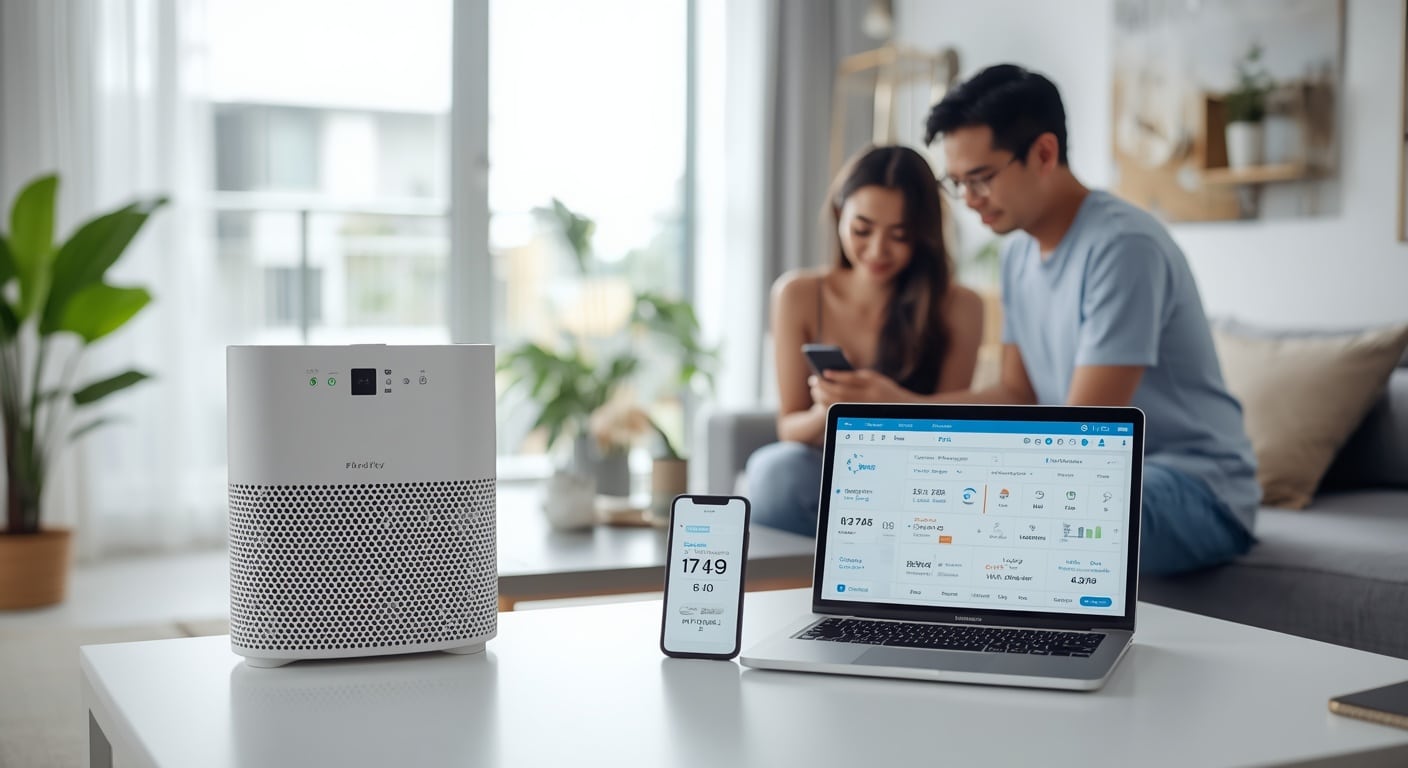
If you are wondering how to choose air purifier malaysia, the best approach is to match the purifier to your room size, air quality concerns, filter type, and daily running cost. In Malaysia, haze season, high humidity, traffic pollution, pet dander, and renovation dust can all affect indoor air quality. A purifier that looks impressive in a shop may still be the wrong choice if it is too small, too noisy, or too expensive to maintain. This guide will help you compare the features that matter most so you can buy an air purifier that suits your home and budget.
Before buying, it also helps to understand your wider home setup, especially if your family is planning changes to layout, ventilation, or finishes. You can explore this home maintenance checklist Malaysia for practical upkeep ideas and browse the best home appliances Malaysia guide if you are comparing other household equipment at the same time.
1. Start with the air problem you want to solve
Not every air purifier is designed for the same issue. The right choice depends on what is affecting your indoor air most often.
- Haze and PM2.5: Common during dry periods and regional haze episodes. Look for a purifier with a true HEPA filter or a high-efficiency particle filter that captures fine dust.
- Dust and allergies: Suitable filters help trap dust mites, pollen, and pet dander, which is useful for bedrooms and homes with fabric furnishings.
- Pet smell: You may need an activated carbon filter in addition to particle filtration. HEPA alone does not remove odours well.
- Renovation dust: If you have recent hacking, painting, sanding, or drilling work, choose a purifier with strong airflow and good filter replacement availability.
- Mould risk from humidity: An air purifier can help capture some airborne spores, but it does not replace fixing moisture issues or improving ventilation.
If your concern is broader indoor pollution from finishes, furniture, or renovation work, a separate indoor air quality guide can help you identify the source before spending money on the wrong appliance.
2. Choose the correct room size and airflow capacity
One of the biggest mistakes buyers make is choosing an air purifier based only on appearance or price. Capacity matters more. A unit that is too small for the room will run continuously and still struggle to clean the air.
Check these points on the product specification:
- Recommended room size: Usually shown in square metres or square feet.
- CADR: Clean Air Delivery Rate indicates how quickly the purifier can clean the air. Higher CADR is generally better for larger rooms or more serious pollution.
- Ceiling height: If your home has high ceilings, open-plan spaces, or loft-style areas, you may need a larger unit than the floor size alone suggests.
As a practical rule, buy slightly above your actual room size if:
- You live near a busy road
- You open windows often
- You have pets
- You want to run the purifier on lower, quieter fan speeds
For example, if your bedroom is around 20 square metres, a purifier rated exactly for 20 square metres may only perform well at high fan speed. Choosing one designed for a slightly larger room gives more flexibility.
If you need a step-by-step comparison process, use an Air Purifier Buying Guide before narrowing down models.
3. Understand filter types before you buy
Filter type affects performance, maintenance, and long-term cost. In Malaysia, where dust, fine particles, and odours can all be issues, this is especially important.
HEPA or high-efficiency particle filters
These are commonly used to capture fine airborne particles such as dust, pollen, and smoke-related particles. For most homeowners, this is the core filter to prioritise.
Activated carbon filters
These help reduce odours, smoke smell, and some gaseous pollutants. If you cook often, have pets, or live near traffic, carbon filtration is useful.
Pre-filters
These catch larger particles like hair and larger dust. A washable pre-filter can help extend the life of the main filter.
UV, ioniser, or extra features
Some purifiers include UV light or ionising functions. These may sound advanced, but they are not the main reason to choose a unit. Put room coverage, particle filtration, and replacement filter cost first.
Always check whether replacement filters are easy to buy in Malaysia. An affordable machine becomes expensive if the filters are hard to find, frequently out of stock, or sold only through a limited channel.
4. Compare running costs, noise, and daily usability
The purchase price is only part of the cost. A good air purifier should be practical to use every day, especially in bedrooms, nurseries, and work-from-home spaces.
Filter replacement cost
Ask these questions:
- How often must the HEPA or main filter be replaced?
- How much does each replacement set cost?
- Are genuine filters available locally?
- Does the purifier have a filter change indicator?
It is better to buy a mid-range unit with reasonably priced filters than a cheap unit with expensive maintenance.
Electricity use
Air purifiers often run for many hours a day. Check the power consumption, especially if you plan to use multiple units at home.
Noise level
Noise matters more than many buyers expect. A purifier that is acceptable in the living room may be too loud for sleeping. If possible, compare the sound level in sleep mode, low mode, and turbo mode.
Controls and convenience
Helpful features include:
- Auto mode with air quality sensor
- Sleep mode
- Child lock
- Timer
- App control for remote monitoring
If you are building a connected home, an air purifier with app integration may fit well with your overall setup. You can compare ideas in the smart home guide Malaysia.
5. Think about placement, humidity, and your home layout
Even a good purifier can underperform if placed badly. Position it where airflow is not blocked by curtains, cabinets, or the back of a sofa. Leave clearance around the unit according to the manufacturer instructions.
In Malaysian homes, these placement tips are useful:
- Bedrooms: Place the purifier near the sleeping area but not blowing directly at your face.
- Living rooms: Put it where the family gathers most often, not hidden in a corner.
- Homes near roads: Place one in the bedroom first if your budget allows only a single unit.
- After renovation: Use one near the occupied zone, but continue cleaning dust manually too.
Also remember that an air purifier does not control humidity. If your room feels damp, has condensation, or shows mould on walls, you may need better ventilation or a dehumidifier. For official guidance on healthy indoor environments and haze-related air quality updates, refer to Malaysia’s Ministry of Health at Kementerian Kesihatan Malaysia.
Common Mistakes to Avoid
- Buying based on price alone: The cheapest model may have weak airflow or expensive filters.
- Ignoring room size: A purifier that is too small will not clean the air effectively.
- Assuming all filters are equal: Odours, fine dust, and pet hair need different filter support.
- Forgetting maintenance cost: Always check replacement filter pricing and local availability.
- Expecting it to solve all air issues: Air purifiers help, but you still need cleaning, ventilation, and moisture control.
- Placing it in a blocked corner: Poor placement limits airflow and reduces performance.
Quick Checklist Before You Buy
- Measure your room size accurately.
- Identify your main concern: haze, dust, allergy, pet dander, or odour.
- Check CADR and recommended room coverage.
- Confirm HEPA or equivalent particle filtration.
- See whether it includes activated carbon for smells.
- Review replacement filter cost and local stock.
- Check noise level for bedroom use.
- Compare power consumption if it will run daily.
- Make sure the unit fits your space and layout.
- Read a local comparison such as Best Air Purifier Malaysia before deciding.
FAQ
Do I need an air purifier in Malaysia?
An air purifier can be helpful in Malaysia if you deal with haze, traffic pollution, dust, allergies, pets, or renovation particles. It is especially useful in bedrooms, nurseries, and homes near busy roads.
What size air purifier should I buy for my room?
Choose a model rated for at least your room size, and preferably a bit larger if you want quieter operation or if your home faces heavier pollution. Always check the recommended coverage and CADR, not just the product name.
Is HEPA enough, or do I need carbon too?
HEPA or high-efficiency particle filtration is important for dust, pollen, and fine particles. If you also want to reduce odours from cooking, smoke, or pets, choose a model with activated carbon as well.
Can an air purifier remove mould in the house?
It can help capture some airborne mould spores, but it will not fix the real cause. You still need to solve dampness, leaks, poor ventilation, or condensation to prevent mould from returning.
How often should I replace air purifier filters?
It depends on the model, usage hours, and your indoor environment. Homes with pets, heavy dust, or haze exposure may need more frequent replacement. Always follow the manufacturer schedule and check whether filters are available locally before buying.
Choosing the right air purifier is less about buying the most expensive model and more about buying the right size, filter type, and maintenance plan for your home. If you focus on your real air problem, compare running costs, and avoid under-sizing, you will make a much better choice for long-term comfort.


