
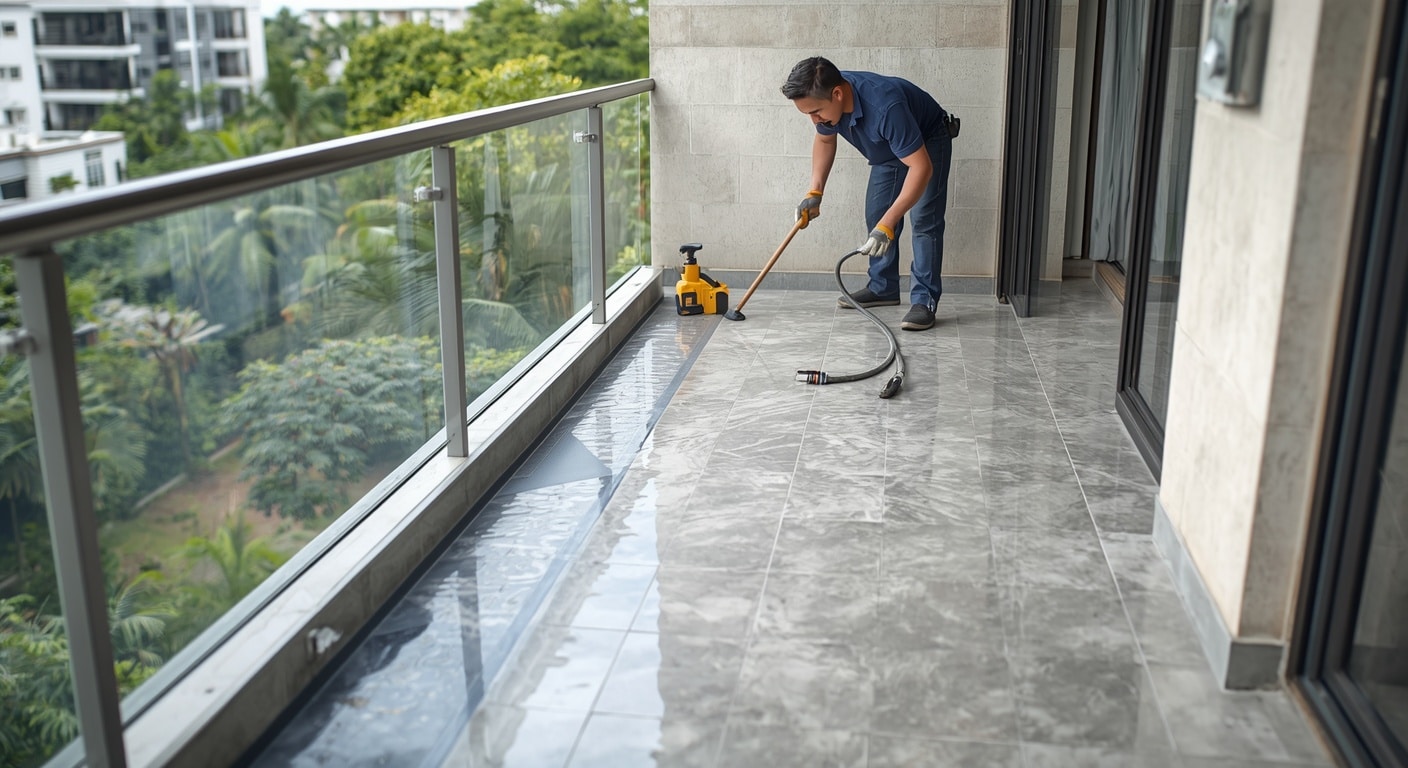
Balcony waterproofing Malaysia is not just a finishing detail. In our hot, humid, and rainy climate, a poorly protected balcony can lead to ceiling stains, peeling paint, mould, ponding water, and concrete damage below. For homeowners in condos, apartments, landed homes, and rooftop terraces, fixing balcony leakage early is far cheaper than repairing structural damage later. If you are planning a renovation or trying to stop recurring leaks, understanding the right waterproofing system, common failure points, and maintenance steps can help you make better decisions before work starts.
Many balcony leaks start from small issues such as hairline cracks, failed tile grout, poor floor slope, blocked outlets, or weak detailing around door thresholds. The good news is that most of these problems can be prevented with the right waterproofing approach and proper workmanship.
Why balcony waterproofing matters in Malaysia
Balconies in Malaysia are exposed to frequent rain, strong UV heat, and daily moisture changes. Over time, this combination causes expansion and contraction in tiles, screed, and concrete. If the waterproofing layer is weak or missing, water can seep through cracks and joints into the slab below.
Common signs that your balcony may have waterproofing problems include:
- Water stains or damp patches on the ceiling below
- Loose, hollow, or popping tiles
- Peeling paint near balcony doors or walls
- Musty smell or mould growth indoors
- Ponding water after rain
- Cracks along floor joints, skirting, or wall corners
For stratified homes such as condos, a leaking balcony can also affect neighbours below and lead to management complaints or repair disputes. If you are already planning wider upgrades, it helps to review a home renovation guide in Malaysia so waterproofing is coordinated with tiling, door replacement, and drainage works.
What causes balcony leaks most often
Many homeowners assume leaking always means the membrane has failed. In reality, balcony leakage can come from several linked problems. Identifying the real cause is important before choosing a repair method.
1. Poor floor slope
The balcony surface should direct water toward the drain outlet. If the slope is too flat or uneven, water will collect in low spots and slowly penetrate grout lines and cracks.
2. Cracked tiles and grout joints
Tiles are not the main waterproofing layer. They are only the surface finish. Once grout cracks or tiles debond, water can easily travel underneath.
3. Failed waterproofing membrane
Some older balconies may have no proper membrane at all, while others fail because of poor substrate preparation, thin application, weak curing, or wrong material selection.
4. Weak detailing at corners and door thresholds
Leakage often starts at movement-prone areas such as wall-floor joints, corners, around railing posts, and near the balcony entrance. These areas need extra reinforcement.
5. Blocked drains and outlets
Leaves, dirt, and renovation debris can clog balcony outlets. When water backs up during heavy rain, the waterproofing system is put under more stress.
6. Movement and structural cracks
Buildings expand, settle, and move slightly over time. A rigid system without proper crack treatment may split and allow water in.
If the issue extends beyond the balcony and involves upper floors or exposed roofs, a separate roof waterproofing guide can help you compare typical causes and repair approaches.
Best waterproofing systems for balconies
There is no single best system for every balcony. The right option depends on the balcony condition, whether tiles will be hacked, sun exposure, expected foot traffic, and budget.
Cementitious waterproofing
This is commonly used in Malaysia for wet areas and balconies under tile finishes. It is usually applied over prepared concrete or screed before tiling.
Best for: Tiled balconies during renovation
Pros: Good bond to concrete, widely available, practical for refurbishment
Limitations: Requires proper surface preparation and protection with screed or tiles
Polyurethane membrane
Polyurethane systems form a seamless coating and can handle some movement. Certain systems are used as exposed finishes, while others are installed below tiles.
Best for: Balconies with more weather exposure or complex detailing
Pros: Seamless finish, flexible, suitable for tricky corners
Limitations: Sensitive to moisture during installation, quality varies with workmanship
Acrylic waterproof coating
Acrylic coatings are sometimes used for light-duty exposed areas or maintenance coating systems. They can be useful for temporary improvement or selected balcony surfaces, depending on the specification.
Best for: Minor maintenance situations or exposed top coatings where appropriate
Pros: Simpler application, reflective options available
Limitations: May not be suitable as a full long-term solution for every leaking tiled balcony
Torch-on membrane
This is more often associated with roofs, but in some cases it may be used on larger terrace areas with suitable build-up.
Best for: Larger exposed decks when designed correctly
Pros: Durable when installed well
Limitations: Less common for small residential balconies, detailing can be harder in tight spaces
When choosing a system, ask whether the product is suitable for UV exposure, whether tiles can be installed over it, how movement joints are treated, and what preparation is required. A useful technical reference on moisture-related durability is guidance from the Royal Institution of Chartered Surveyors (RICS), an established industry body.
How proper balcony waterproofing work should be done
A good balcony waterproofing job is more about process than product alone. Even quality materials can fail if applied on a dirty, damp, or cracked substrate.
- Inspection and leak diagnosis
Check whether water is coming from the balcony floor, wall joints, planter boxes, drain outlet, air-conditioner piping, or the unit above. A visual inspection, water ponding test, or moisture check may be needed.
- Remove failed finishes if necessary
If tiles are loose or leakage is severe, hacking may be required to expose the slab or screed. Overlay repairs on top of failed finishes often do not last.
- Prepare the substrate
The base must be clean, sound, and properly profiled. Cracks, honeycombs, and weak screed should be repaired first.
- Create the correct slope
The floor should fall toward the outlet so water drains quickly. This is one of the most overlooked steps in balcony waterproofing Malaysia projects.
- Treat corners, joints, and penetrations
These areas usually need reinforcing tape, bond breaker, or additional membrane layers.
- Apply the waterproofing system to specification
This includes primer if required, correct thickness, proper drying time, and enough coats.
- Carry out water testing
A flood or ponding test helps confirm the system is performing before tiles or protective finishes are installed.
- Install the final finish carefully
Tiling, skirting, and sealant work should not damage the completed membrane.
If you are budgeting for hacking, re-screeding, retile work, and waterproofing together, it is smart to compare your scope with this overview of house renovation cost in Malaysia so you can plan realistic allowances.
Common mistakes homeowners should avoid
- Repairing only the visible crack: Surface patching without finding the leak path usually fails.
- Using tile grout as waterproofing: Grout is not a substitute for a proper membrane.
- Skipping floor slope correction: Even a good membrane struggles if water keeps ponding.
- Choosing the cheapest quote blindly: Low prices may exclude hacking, joint treatment, or water testing.
- Waterproofing over loose tiles: The base must be stable for durable results.
- Ignoring maintenance after repair: Blocked drains and cracked sealant can restart leakage.
For ongoing care after repairs, follow a practical home maintenance checklist in Malaysia so drains, joints, and exposed surfaces are checked before and after the monsoon season.
Practical tips for homeowners before hiring a contractor
You do not need to be a technical expert, but asking the right questions can prevent poor workmanship.
- Ask what is causing the leak and how they confirmed it
- Request the proposed waterproofing system and full work sequence
- Check whether hacking of tiles or screed is included
- Ask how corners, door thresholds, drain outlets, and railing bases will be treated
- Confirm whether water testing is included before finishing
- Ask what surface protection or tile reinstatement is part of the quote
- Get the warranty terms in writing and understand what is excluded
It also helps to compare repair scopes using a guide on waterproofing cost in Malaysia, especially if one quotation seems much lower than the rest.
Short homeowner checklist
- Inspect for ponding water after rain
- Check ceiling below for damp stains
- Look for cracked grout, loose tiles, or peeling paint
- Clear leaves and debris from balcony drains
- Seal minor joint gaps early before they worsen
- Arrange inspection if leakage appears during monsoon months
FAQ about balcony waterproofing in Malaysia
How long does balcony waterproofing last?
It depends on the system used, workmanship quality, sun and rain exposure, and maintenance. A properly installed system should last for years, but exposed balconies in harsh weather may need earlier maintenance than sheltered ones.
Can I waterproof a balcony without removing the tiles?
Sometimes yes, but it depends on the actual cause. If leakage is due to failed grout or isolated surface cracks, a temporary or limited overlay solution may help. If tiles are loose, water is trapped below, or the slope is wrong, hacking is usually the more reliable solution.
Is balcony leakage always caused by cracked tiles?
No. Cracked tiles are only one possible symptom. The real issue may be a failed membrane, poor outlet detailing, weak screed, inadequate slope, or leaks from adjacent walls and thresholds.
What is the best time to do balcony waterproofing in Malaysia?
Dry weather is usually better because the substrate must be prepared and cured properly. Contractors may still work during wetter months, but timing and site protection become more important.
Should I retile the balcony after waterproofing?
Not always. Some systems are designed to remain exposed, while others need protection under tiles or screed. The right finish depends on the product specification, balcony use, and desired appearance.
Balcony waterproofing is one of those jobs where proper diagnosis and preparation matter more than quick fixes. In Malaysia’s climate, even a small balcony leak can spread into bigger repair costs if it is ignored. If you notice stains, ponding, cracked grout, or recurring dampness, act early, ask the right questions, and choose a repair method that solves the root cause rather than just the surface symptom.


