
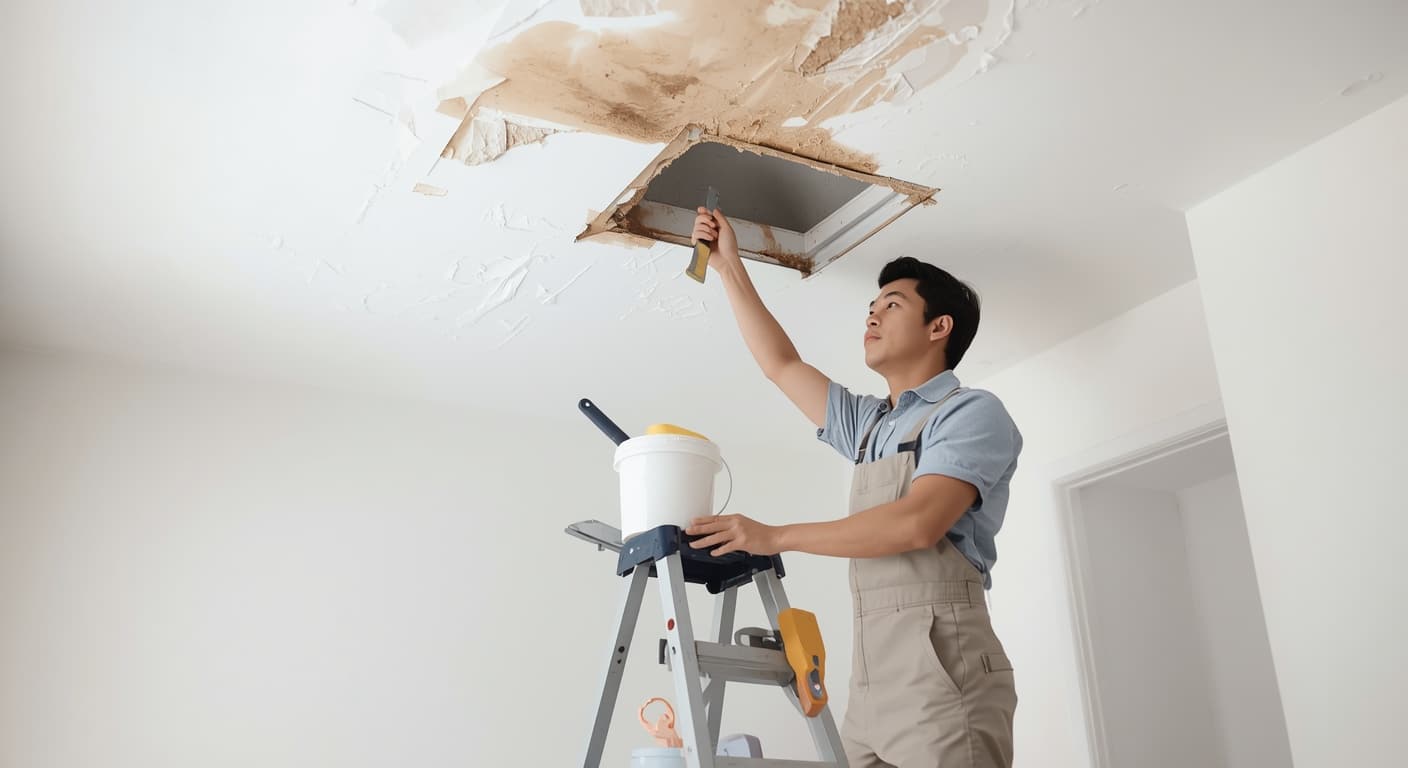
A ceiling leak can quickly turn from a small stain into damaged plaster, mould, peeling paint, and even electrical risk. This ceiling water leak repair guide is written for Malaysian homeowners who need a clear plan: what to do first, how to find the source, when a simple fix may work, and when to call a plumber, roofer, or contractor. In Malaysia, leaks often get worse during heavy rain, monsoon periods, and in upper-floor bathrooms or roof areas. The key is to act fast, stop further damage, and repair both the leak source and the ceiling surface properly.
What to do immediately when you notice a ceiling leak
The first step is damage control. Do not focus only on the ceiling stain. Water may travel from another area before it appears overhead, so the visible patch is not always the source.
- Move furniture and valuables away from the wet area.
- Place a bucket or container under active drips.
- Turn off electricity to the affected room if water is near lights, ceiling fans, or wiring.
- Poke a small drainage hole in a bulging plaster ceiling if water is trapped inside. This can prevent a larger collapse, but only do this carefully and after protecting the floor.
- Take photos of the damage for your own records, building management, or insurance if needed.
- Check upstairs or roof access to see whether the leak started from a bathroom, water pipe, roof tile, gutter, or water tank area.
If you live in a strata property such as a condo or apartment, inform building management early. Some leaks may involve common property pipes, external walls, or roof waterproofing that falls under management responsibility.
How to identify the real source of the leak
A proper repair starts with finding the source. Fixing and repainting the ceiling alone will not solve the problem if water continues to enter.
Common causes in Malaysian homes
- Bathroom waterproofing failure from the floor above
- Leaking water pipes inside ceiling voids
- Air-conditioner drainage problems causing overflow or condensation
- Roof leaks from broken tiles, flashing gaps, or cracked roof slabs
- Blocked gutters during heavy rain
- Water tank or heater leaks in landed homes
Simple checks you can do
- Observe when the leak happens. If it leaks only during rain, the roof, gutters, or external wall may be the issue. If it happens after someone showers or uses a toilet upstairs, the problem may be waterproofing or plumbing.
- Look for nearby fixtures. A stain near a bathroom, kitchen, or AC unit gives you a strong clue.
- Check for musty smells or soft patches. These often point to long-term moisture trapped above the ceiling.
- Inspect the upstairs floor. Loose tiles, cracked grout, or ponding water in bathrooms can allow seepage over time.
If the leak source is unclear, avoid guessing. Opening the ceiling blindly can increase repair cost. A plumber or leak specialist may use pressure testing, moisture detection, or isolation checks to confirm the source.
How ceiling water leak repair is usually done
Most homeowners think of ceiling repair as patching the damaged board and repainting it. In reality, there are two separate jobs: stopping the leak source and restoring the ceiling finish.
Step 1: Fix the source of water
This may involve replacing a leaking pipe, resealing a bathroom floor, repairing roof tiles, clearing gutters, fixing flashing, or unclogging an air-conditioner drain line. If your home has repeated leakage issues, it may help to review a broader home maintenance checklist Malaysia homeowners can follow to catch warning signs early.
Step 2: Remove damaged material
Once the leak is stopped, the damaged section of plasterboard, gypsum board, skim coat, insulation, or paint may need to be removed. Wet ceiling material that is left in place can lead to sagging, mould, or poor patch adhesion.
Step 3: Dry the area fully
This step is often rushed. The cavity above the ceiling must be dry before patching. Depending on the leak severity, drying may take a few days. Using fans and improving ventilation helps.
Step 4: Patch and refinish the ceiling
The contractor may replace a ceiling panel, apply joint treatment, skim coat the repaired area, sand it smooth, and repaint. If the stain is large, repainting the whole ceiling often gives a more even finish than touching up one patch.
Step 5: Check for hidden mould or electrical damage
Ceiling leaks near light fittings, downlights, or fan points should be checked carefully. If wiring has been exposed to water, an electrician should inspect it before power is restored.
When you can DIY and when you should call a professional
Some minor issues are manageable, but many ceiling leaks need professional diagnosis because the visible damage is only part of the problem.
You may handle it yourself if:
- The issue is minor condensation from an AC vent and the cause is obvious
- The stain is old, fully dry, and the source has already been professionally fixed
- You only need to clean, monitor, or do light repainting after proper drying
Call a professional if:
- Water is actively dripping
- The ceiling is bulging, sagging, or cracked
- The leak is near electrical points
- You suspect a hidden pipe leak
- The leak happens during rain and may involve roof work
- The upstairs bathroom waterproofing may have failed
- Mould is visible or the smell is strong
For larger repairs, it is useful to understand how this work fits into wider home upgrading plans. If the leak is part of an older property condition issue, you may also want to read this Home Renovation Guide Malaysia to plan repairs in the right order.
Common mistakes homeowners make
- Painting over the stain too early
If the source is not fixed or the ceiling is still damp, the stain usually returns.
- Ignoring small yellow marks
A small watermark can be an early sign of a bigger hidden leak. Acting early usually means less damage.
- Assuming the leak is directly above the stain
Water can travel along beams, pipes, or slab surfaces before dripping.
- Delaying repairs during the rainy season
In Malaysia, a small roof leak can worsen very quickly with repeated storms.
- Not checking upstairs wet areas
Bathrooms, balconies, yard areas, and AC ledges are common leak points in local homes.
- Skipping proper drying
Patching a wet ceiling traps moisture and increases the risk of mould and poor finishing.
Practical checklist for ceiling leak repair
Use this quick checklist to stay organised:
- Contain the leak with buckets and floor protection
- Switch off power if water is near electrical points
- Document the location and severity
- Identify whether the leak happens during rain or water usage
- Inspect roof, bathroom, plumbing, AC, or upstairs areas
- Report to building management if you live in a strata unit
- Repair the water source first
- Remove wet or damaged ceiling material
- Dry the area fully before patching
- Repaint only after the repair is stable
- Monitor the area for at least a few weeks after repair
If the damage is extensive, budgeting is important because the total cost may include leak detection, source repair, ceiling replacement, painting, and electrical checks. This overview of House Renovation Cost Malaysia can help you plan for broader repair expenses.
FAQ
How do I know if a ceiling leak is serious?
If the ceiling is sagging, dripping heavily, spreading quickly, or close to electrical fittings, treat it as urgent. A bulging ceiling can collapse, especially if water is pooling above plasterboard or gypsum board.
Can I just repaint a water-stained ceiling?
You can repaint only after the leak source is fixed, the area is completely dry, and any damaged material is repaired. Otherwise, the stain or peeling paint will usually come back.
Who should I call for a ceiling leak in Malaysia?
It depends on the source. Call a plumber for pipe leaks, a roofer for roof leaks, an air-conditioner technician for AC drainage issues, or a contractor for ceiling patching and repainting. In condos and apartments, contact building management first if common property may be involved.
How long should I wait before repairing the ceiling surface?
Wait until the leak source is repaired and the affected area is fully dry. For minor leaks, drying may take a couple of days. For severe leaks, it may take longer depending on ventilation and how much water entered the ceiling cavity.
What is the most common cause of ceiling leaks?
In many Malaysian homes, common causes include upstairs bathroom waterproofing failure, leaking concealed pipes, roof tile or flashing problems, blocked gutters during heavy rain, and clogged air-conditioner drain lines.
A ceiling leak is never just a cosmetic issue. Quick action can protect your ceiling, wiring, paintwork, and indoor air quality. Follow this ceiling water leak repair guide by focusing first on safety, then on proper diagnosis, and finally on full restoration. When in doubt, get the right specialist involved early. A small leak handled properly is far easier and cheaper to manage than a collapsed ceiling or recurring damp problem.


