
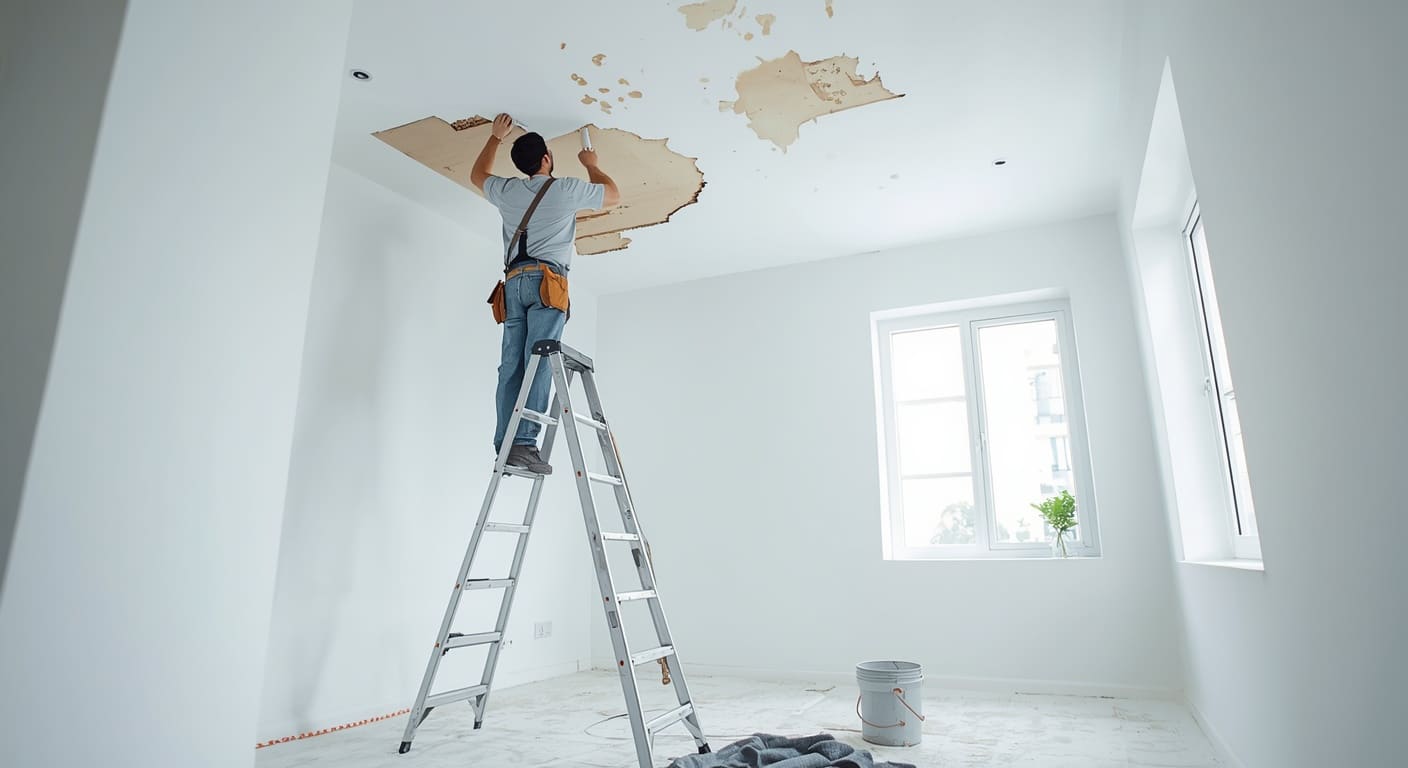
Ceiling water leak repair should start with one priority: stop the source of water before patching the ceiling. Many Malaysian homeowners see a brown stain, peeling paint, or a soft spot overhead and rush to repaint it, but cosmetic fixes will not last if the leak is still active. Whether the problem comes from a roof leak, an upstairs bathroom, an aircond drain line, or old plumbing, the right repair process can prevent mould, damaged wiring, and a bigger repair bill later.
In this guide, you will learn the common causes of ceiling leaks, how to inspect the damage safely, what repairs may be needed, and when it is smarter to call a professional.
What causes a ceiling water leak?
A ceiling leak is usually a symptom, not the main problem. The water may travel along beams, concrete slabs, piping, or plasterboard before it becomes visible. That is why the wet patch is not always directly below the actual leak source.
Common causes in Malaysian homes include:
- Roof leaks from cracked roof tiles, damaged flashing, blocked gutters, or worn waterproofing during heavy rain
- Upstairs bathroom leaks caused by failed tile grout, waterproofing issues, leaking toilet seals, or shower pipe joints
- Plumbing leaks from concealed water pipes above the ceiling
- Aircond drainage problems such as a clogged condensate drain or overflowing tray
- Water tank or heater leaks in landed homes or top-floor service areas
- Condensation in poorly ventilated spaces, especially around ducting or cold pipes
If the stain appears after rain, the roof or external wall may be the cause. If it appears when someone showers, flushes, or uses a basin upstairs, it may be a plumbing or bathroom waterproofing issue. For broader upkeep planning, a home maintenance checklist for Malaysian homes can help you spot early warning signs before a leak spreads.
How to inspect a ceiling leak safely
Before any ceiling water leak repair begins, make the area safe. Water and electricity are a dangerous combination, especially if the leak is near downlights, ceiling fans, or wiring.
Safety steps first
- Switch off electricity to the affected area if water is near electrical points
- Place a bucket or container under active drips
- Move furniture, carpets, and appliances away from the leak
- If the ceiling is bulging, do not stand directly under it
A swollen plaster ceiling can collapse without much warning. If there is a large bubble of trapped water, only puncture it if you can do so safely and are prepared to control the flow with a bucket and protective covering.
What to look for
- Brown or yellow water stains
- Peeling paint or blistering skim coat
- Soft, sagging, or cracked plasterboard
- Mouldy smell or visible black spots
- Drips that worsen during rain or after bathroom use
If possible, inspect the area above the leak. For example, check the upstairs bathroom floor, roof space, or aircond unit. In landed homes, this may require roof access, so refer to a proper roof repair guide if the signs point to roof damage.
Step-by-step ceiling water leak repair process
The right repair depends on the cause and the extent of damage. In most cases, the process has two parts: fix the leak source, then repair the ceiling finish.
1. Stop the water source
This is the most important step. Examples include:
- Replacing broken roof tiles or sealing flashing gaps
- Repairing leaking supply pipes or waste pipes
- Clearing blocked aircond drain lines
- Resealing bathroom fixtures or fixing failed waterproofing
Do not skim, patch, or paint the ceiling before this is done. Otherwise, the stain and moisture will return.
2. Dry the affected area fully
After the leak is fixed, the ceiling cavity and surface need time to dry. Use fans and ventilation if possible. In humid Malaysian weather, drying may take longer than expected. If the area stays damp, mould can continue growing behind the paint layer.
3. Remove damaged materials
If the plasterboard, gypsum board, or ceiling panel has softened, sagged, or started crumbling, damaged sections should be cut out and replaced. Minor stains may only need surface treatment, but waterlogged boards usually cannot be saved.
For decorative finishes or large damaged sections, a dedicated ceiling repair guide can help you understand patching, joint treatment, and finishing options.
4. Treat staining and mould
Once dry, clean any mould carefully. Then apply a stain-blocking sealer before repainting. This helps prevent old brown marks from bleeding through the new paint. If the leak was severe, hidden insulation or timber may also need inspection.
5. Refinish the ceiling
The final stage usually includes patching joints, sanding smooth areas, applying primer, and repainting the repaired section. For the best visual result, many homeowners repaint the whole ceiling plane instead of one small patched area, especially if the existing paint has faded.
When can you do it yourself, and when should you call a pro?
Some minor issues are manageable if you are confident and the source is obvious. However, many ceiling leaks involve hidden building systems, and trial-and-error repairs often make the problem more expensive.
DIY may be suitable for:
- Cleaning a blocked aircond drain line
- Replacing a small amount of damaged paint after the ceiling is fully dry
- Monitoring a minor stain that has already been professionally diagnosed and fixed
Call a professional if:
- The ceiling is sagging, cracked, or looks close to collapse
- The leak is near wiring, lights, or a distribution board
- You cannot identify whether the source is the roof, bathroom, or plumbing
- The leak returns after a previous repair
- There is widespread mould or a strong damp smell
- The problem involves waterproofing failure in an upstairs toilet or shower
For hidden moisture, damaged finishes, and follow-up repairs, a detailed water damage guide can also help you understand what should be checked beyond the visible stain.
If the damage is extensive, you may also need to budget for broader repair work. This is where a general reference on house renovation costs in Malaysia can help you plan the next step realistically.
Common mistakes homeowners make
- Painting over the stain too early
If the surface is still damp or the leak source is unresolved, the stain will come back.
- Assuming the leak is directly above the stain
Water can travel sideways through ceiling cavities and slab surfaces.
- Ignoring a small yellow patch
Small stains can point to ongoing hidden leaks that slowly weaken the ceiling.
- Using sealant as a universal fix
Surface sealant may help a minor joint issue, but it will not solve failed waterproofing, damaged roofing, or burst pipes.
- Not checking for mould
Even after a leak dries, residual moisture can lead to mould growth that affects indoor air quality.
- Delaying repairs during monsoon periods
In Malaysia, repeated rain exposure can turn a manageable leak into major ceiling damage within weeks.
Practical checklist for ceiling leak problems
Use this quick checklist when you notice a leak:
- Switch off electricity to the affected area if needed
- Contain dripping water with a bucket or plastic sheet
- Check whether the leak happens during rain, shower use, or aircond operation
- Take photos of stains, cracks, and visible water flow
- Inspect the area above the ceiling if it is safe to do so
- Fix the leak source first
- Let the ceiling dry completely
- Replace soft or sagging ceiling material
- Apply stain blocker before repainting
- Monitor the area for a few weeks after repair
For technical advice on moisture and mould risks in buildings, you can also refer to the industry guidance from InterNACHI, a recognised inspection association.
FAQ about ceiling water leak repair
Can I just repaint a ceiling with a water stain?
Only after the leak source has been fixed and the ceiling is fully dry. If you repaint too early, the stain may bleed through and the paint can peel again. A stain-blocking primer is usually needed before the topcoat.
How do I know if the leak is from the roof or plumbing?
If it gets worse during or after rain, the roof or external wall is a likely cause. If it appears when an upstairs bathroom, basin, or pipe is used, plumbing or waterproofing is more likely. Sometimes both timing and inspection are needed to confirm the source.
Is a sagging ceiling dangerous?
Yes. A sagging ceiling may mean water has soaked the board or accumulated above it. The material can weaken and collapse, especially with gypsum or plasterboard ceilings. Keep people away from the area and call a professional if the sagging is significant.
How long should I wait before repairing the ceiling surface?
There is no single timeline because it depends on the amount of water, room ventilation, and ceiling material. The key is to make sure the leak is fixed and the substrate is completely dry before patching, priming, or painting.
Will insurance cover ceiling water leak repair in Malaysia?
It depends on your home insurance policy and the cause of the leak. Sudden accidental damage may be treated differently from wear and tear or poor maintenance. Check your policy wording and keep photos, repair reports, and receipts if you plan to make a claim.
Ceiling leaks rarely fix themselves, and the longer you wait, the more damage can spread into paint, plasterboard, timber, insulation, and electrical points. A careful ceiling water leak repair process starts with identifying the true source, drying the area properly, and only then restoring the ceiling finish. If you are unsure where the water is coming from or the ceiling looks unsafe, get a qualified contractor to inspect it before the damage worsens.


