
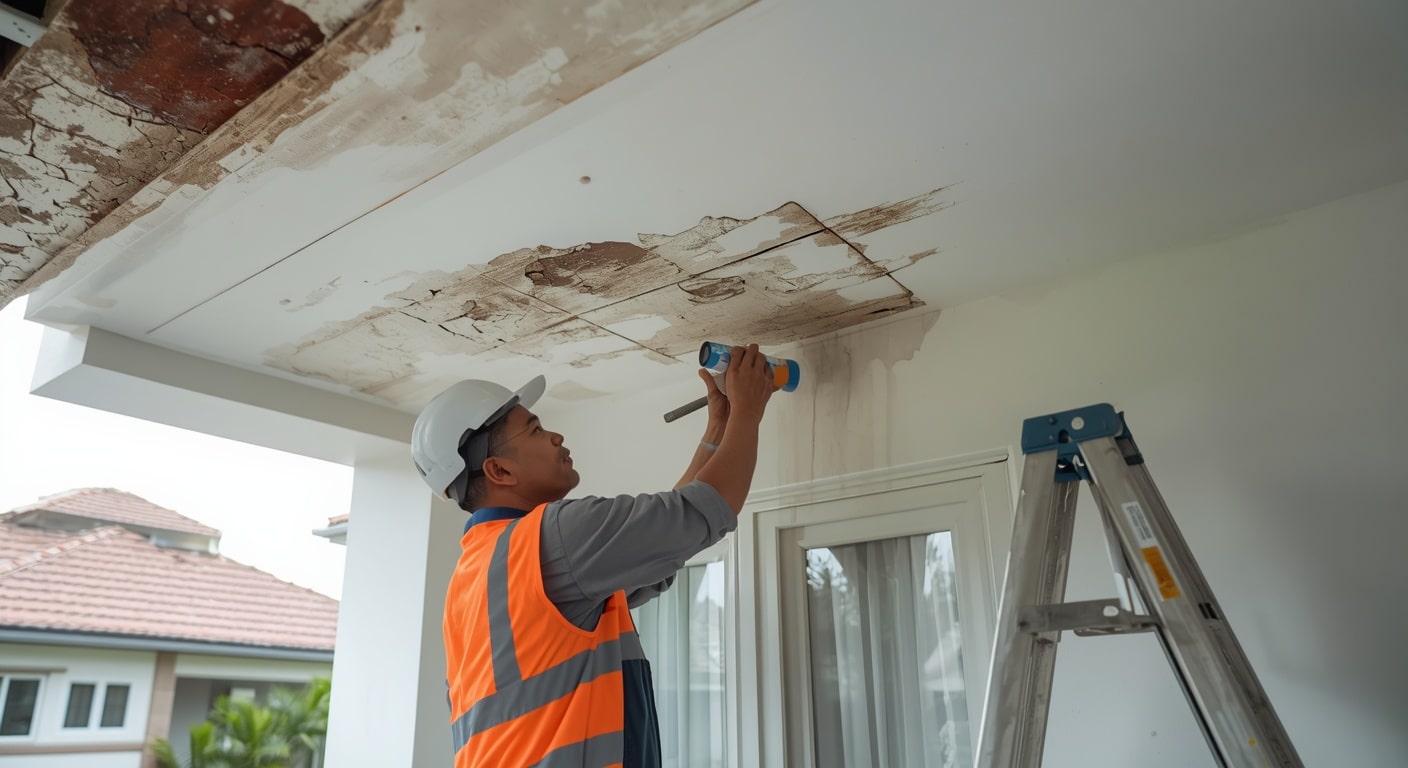
A roof leak malaysia problem can start small, then quickly turn into stained ceilings, damaged plaster, mould, and costly repairs. In Malaysia’s hot weather, heavy rain, and sudden storms, roofs take a lot of punishment throughout the year. If you notice water marks, dripping during rain, or damp patches near the ceiling, it is important to act early. This guide explains the common causes of roof leaks in Malaysian homes, how to identify the source, what fixes may be needed, and what costs to expect so you can respond before the damage spreads.
Whether you live in a terrace house, semi-D, bungalow, or upper-floor unit with a roof structure above, knowing the basics of leak repair helps you speak more confidently with contractors and avoid unnecessary work. You can also pair regular inspections with a home maintenance checklist malaysia to reduce repeat problems.
What usually causes roof leaks in Malaysian homes
Most roof leaks do not happen because the entire roof has failed. In many cases, the issue comes from a weak point where water can enter during wind-driven rain. Malaysia’s frequent downpours, high humidity, falling leaves, and strong sun can all shorten the lifespan of certain roofing components.
Common leak sources
- Broken or slipped roof tiles caused by age, impact, or improper installation.
- Cracked ridge caps where cement or mortar has deteriorated over time.
- Damaged flashing around chimneys, roof joints, walls, skylights, or pipe penetrations.
- Blocked gutters and valleys that force water to back up under tiles or sheets.
- Worn waterproofing membranes on flat roof sections, concrete gutters, or extensions.
- Rust and screw failure on metal roofs, especially at fastener points.
- Poor workmanship from earlier repairs that only patched the symptom instead of the real entry point.
- Condensation issues in attic or ceiling spaces that are mistaken for rain leaks.
For older homes, leaks are also more common after renovation work, antenna or solar installation, or air-conditioning pipe additions where the roof surface was disturbed. If your home has gone through several upgrades, it helps to review leak risks together with a broader home renovation guide malaysia before starting another project.
How to identify where the leak is really coming from
One of the biggest challenges with roof leaks is that the drip point indoors may not be directly below the actual entry point. Water can travel along rafters, ceiling boards, insulation, or concrete surfaces before becoming visible.
Signs to look for inside the house
- Yellow or brown ceiling stains
- Peeling paint or bubbling plaster
- Dripping during or shortly after rain
- Musty smell or mould growth near the ceiling
- Warped built-in cabinets near upper walls
- Damp spots around light fittings
Signs to check outside
- Missing, cracked, or displaced tiles
- Rust patches on metal roofing
- Debris buildup in gutters and roof valleys
- Cracked cement at ridge caps
- Open gaps near wall junctions or flashing lines
- Standing water on flat roof areas
If it is safe, inspect the roof from the ground first using binoculars or your phone zoom. Avoid climbing onto a wet or steep roof yourself. For homes with a ceiling void or attic space, a contractor may inspect from inside to find water trails, daylight gaps, or damp insulation.
A simple way to narrow down the source is to note exactly when the leak happens. If it leaks only during heavy wind-driven rain, wall flashing or side overlaps may be the issue. If it leaks after prolonged rain, blocked drainage or membrane failure is more likely. If there is dampness even without rain, condensation or plumbing may be involved instead of the roof.
Best repair methods for different types of roof leaks
The correct repair depends on the roof material, age of the roof, and the real source of the leak. Temporary sealing may stop water briefly, but a lasting solution usually requires fixing the damaged component itself.
For tiled roofs
- Replace cracked, chipped, or slipped tiles
- Repair or rebed ridge caps where mortar has failed
- Install or replace underlay if accessible during larger repairs
- Fix flashing at roof-to-wall joints and penetrations
- Clear leaf buildup in valleys and gutters
Tiled roofs are common in Malaysian landed homes. A few damaged tiles can cause repeated leakage, especially during storms. Contractors may remove surrounding tiles to inspect the underlay and battens before replacing the problem area.
For metal roofs
- Replace rusted sheets or severely corroded sections
- Change old screws with new fasteners and sealing washers
- Seal side laps and end laps where appropriate
- Repair flashing around ridges, walls, and pipe penetrations
- Apply protective coating only after substrate issues are fixed
Metal roofs can fail at the fasteners first. If the roof is older, repairs may involve both sealing and panel replacement. Simply applying roof sealant over rust rarely lasts if the sheet below is already weak.
For flat roofs or concrete roof slabs
- Repair cracks in the substrate
- Reapply waterproofing membrane
- Improve slope to reduce ponding water
- Seal joints around drains and parapet walls
- Replace damaged screed if required
Flat roof leaks often need a more systematic repair, especially if previous patching has failed multiple times. In some cases, the membrane may need full replacement across the affected area rather than isolated spot treatment.
For gutters and drainage issues
- Remove leaves, dirt, and nesting debris
- Repair cracked concrete gutters or leaking joints
- Adjust gutter slope if water is not flowing properly
- Replace rusted sections and damaged downpipes
Blocked drainage is one of the most preventable causes of roof leakage in Malaysia, especially in homes near trees.
What roof leak repairs usually cost in Malaysia
Roof repair cost varies based on the roof type, access difficulty, extent of damage, and whether the repair is localised or widespread. A minor fix such as replacing a few broken tiles or resealing a small flashing area will normally cost much less than membrane replacement or major structural work.
| Type of work | Typical scope | Cost expectation |
|---|---|---|
| Minor leak inspection and patch repair | Basic site check, sealing, small localised fix | Lower cost range |
| Tile replacement and ridge cap repair | Replace damaged tiles, repair mortar joints | Low to mid range depending on area |
| Flashing repair | Wall junction, penetration, or valley flashing work | Mid range |
| Metal roof fastener and sheet repair | Fastener replacement, sealing, limited sheet works | Mid range |
| Waterproofing for flat roof area | Membrane renewal, crack repair, re-coating | Mid to higher range |
| Major reroofing or large section replacement | Extensive material and labour work | Higher cost range |
Because labour, material access, and roof height vary widely, it is best to get at least two or three quotations. Ask for a breakdown that separates inspection, material replacement, waterproofing, and access equipment if needed. If your roof leak is part of a larger house upgrade, you may also want to review broader budgeting tips in this house renovation cost malaysia guide.
What affects the final price
- Type of roof material
- Number of leak points
- Roof height and accessibility
- Need for scaffolding or safety setup
- Condition of timber battens or roof structure below
- Whether ceiling repairs are also needed
- Urgency during monsoon or storm season
Be cautious of extremely cheap quotes that focus only on applying sealant. If the underlying issue is not addressed, the leak may return after the next few heavy rains.
When to repair, when to patch, and when to replace
Not every roof leak means full replacement is necessary. The right decision depends on the age of the roof and how widespread the damage is.
Repair is usually enough when
- The leak is limited to one or two areas
- The rest of the roof is still in reasonable condition
- The damage is caused by broken tiles, flashing failure, or gutter blockage
- The roof structure below is still sound
A temporary patch may be reasonable when
- You need urgent water control during ongoing rain
- You are waiting for dry weather to complete proper repairs
- The damaged area has already been identified and short-term protection is needed
Replacement may be more practical when
- The roof is old and leaking in multiple places
- There is widespread rust, brittle tiles, or failed underlay
- Repeated repairs have not solved the problem
- Structural timber or ceiling damage has started to appear
For homeowners planning a major update, roof replacement may be easier to coordinate alongside other exterior or interior works so the overall schedule is more efficient.
Common mistakes homeowners make with roof leaks
- Waiting too long and allowing a small stain to become ceiling, wiring, or mould damage.
- Assuming the drip point is the source without proper tracing.
- Choosing the cheapest patch only instead of finding the root cause.
- Using the wrong sealant on unsuitable surfaces or during wet conditions.
- Ignoring blocked gutters after nearby tree growth.
- Skipping post-repair testing to confirm the leak is fully resolved.
- Not checking the ceiling cavity where hidden moisture may continue damaging the structure.
A good contractor should explain what failed, what is being repaired, and whether the fix is localised or part of a larger roof condition issue.
Quick checklist before hiring a roof leak repair contractor
- Ask what the likely cause of the leak is
- Confirm whether they will inspect both roof surface and ceiling area
- Request photos before and after repair if possible
- Check exactly what materials will be replaced
- Ask whether the quoted work is patch repair or long-term repair
- Clarify warranty terms for workmanship and materials
- Make sure rainwater goods such as gutters are included if relevant
FAQ about roof leak repair in Malaysia
How urgent is a roof leak if the drip is still small?
Even a small drip should be checked quickly. In Malaysia, repeated heavy rain can turn a minor leak into damaged plaster, mould, rotten timber, and electrical risk. Early repair is usually cheaper than waiting.
Can I just use roof sealant to fix the leak myself?
Sealant can be a temporary measure for very minor and visible gaps, but it is often not a permanent solution. If the leak is caused by broken tiles, failed flashing, rusted sheets, or waterproofing failure, the damaged component usually needs proper repair or replacement.
Why does my ceiling leak only during heavy rain with wind?
This often points to a roof side entry issue such as flashing gaps, displaced tiles, exposed joints, or rain being forced upward under the roof covering. Wind-driven rain can reveal weaknesses that do not show during normal showers.
How often should I inspect my roof in Malaysia?
A basic visual check from the ground every few months is helpful, with a more careful inspection after major storms, falling branches, or recurring ceiling stains. Gutters should also be cleaned regularly, especially if your house is near trees.
Will insurance cover roof leak repairs?
It depends on your policy and the cause of damage. Sudden storm-related damage may be treated differently from wear and tear, poor maintenance, or long-term deterioration. Check your policy wording and keep photos of the damage for reference.
Roof leaks are easier and cheaper to solve when caught early. If you notice stains, drips, or damp smells, arrange an inspection before the next round of heavy rain. A careful diagnosis, proper material repair, and regular maintenance can help protect your Malaysian home from recurring water damage.


